Justice Antonin Scalia: A Brief Retrospective
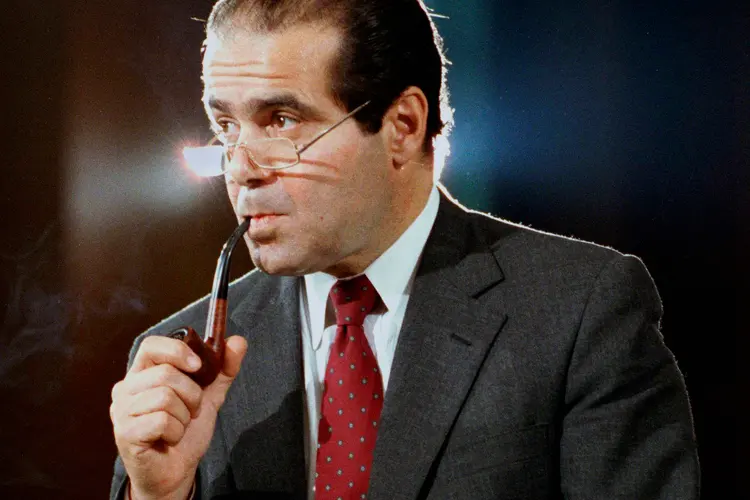
Justice Antonin Scalia served on the Supreme Court for 29 years. He was a champion of textualism, a way of reading law which takes preceding legal documents, particularly the constitution, at their “word-value”, and not their implied intent. Justice Scalia was also known for his scathing dissents, tearing through other Justice’s arguments and rulings with aggressive legal reasoning. It's now been a decade since his passing, and I felt The Review needed a word or two about one of the most influential Supreme Court Justices in modern history.
Selected by President Ronald Reagan, Justice Scalia had served in political roles under the Nixon and Ford administrations. In 1982, President Reagan offered Justice Scalia a position on the US Court of Appeals for the District of Columbia circuit. After accepting the position, Justice Scalia served on the court for approximately four years, before Chief Justice Warren Burger gave President Reagan his decision to retire. After the President appointed Justice William Rehnquist to fill Justice Burger’s post, Justice Scalia was confirmed to the Supreme Court on September 17th, 1986 by a unanimous vote of 98-0.
Justice Scalia’s impact was immediate and often dominating. For example, Morrison v. Olson (1988) is more famous for Justice Scalia’s scathing dissent, overshadowing the 7-1 decision by the Supreme Court. Noted by fellow Justices for the extensive emotional content of the dissenting opinion, Justice Scalia warned that upholding independent counsel laws stripped the President of “executive powers”.
His dissents were known for their fiery rebukes of his colleague’s reasoning, whether he was calling the upholding of Obamacare “pure applesauce”, or ferociously addressing the government’s holding of “enemy combatants” without charges. Specifically, he rejected Justice O’Connor’s plurality opinion which proposed a relaxed system of hearings for detainees, saying the judicial branch should not allow another branch to have an easier path to prosecute detainees. But of course, Justice Scalia’s style of writing alienated some, with Justices O’Connor and Kennedy frequently being the targets of his legal ire.
Despite a legacy of dissent, Justice Scalia also famously penned many majority decisions for the Supreme Court. Employment Division v. Smith (1990) was a distinctly non-conservative ruling from the Supreme Court, concerning religious freedoms. Justice Scalia wrote the opinion for the majority, which held that neutral rules of general applicability do not violate the free exercise clause of the first amendment. Widely considered to be a controversial decision, Justice Scalia utilized his famous legal reasoning to justify laws which apply to all persons, and are not specifically discriminatory towards religious tradition. He also clearly distinguished between his personal politics and what was right for the law, claiming “If it were up to me, I would put in jail every sandal-wearing, scruffy-bearded weirdo who burns the American flag. But I am not king”, when ruling on if burning the American flag is a criminal offense. Justice Scalia never strayed from his legal reasoning, despite his “politics”.
Originalism and textualism are forms of legal reasoning and reading which emphasize the importance of reading legal doctrine as they were originally meant, with no additional context beyond the intention of the written law. Justice Scalia was a pioneer in applying this system of reasoning, and credited it with his writings, both personal and professional, and his success on the bench.
When Justice Scalia passed away in 2016, many looked back at his career and marveled at the way he read the law. During a Harvard lecture, Justice Elena Kagan famously said, “We now are all textualists”. Legal researchers and analysts have noted the additions of Chief Justice John Roberts and Justice Samuel Alito have resulted in more textualists being added to the Supreme Court, following in Scalia’s footsteps, and being able to apply their reasoning alongside one of their influences. President Obama, upon Justice Scalia’s passing, called him, “one of the towering legal figures of our time”. The simple truth is that Scalia transcended politics. Both sides of the aisle had to acknowledge his resounding influence.
Still, his impact and legacy are a mixed bag for some. As a devout Catholic, Justice Scalia oftentimes ruled against abortion, claiming the issue should be resolved by passing a law through congress, and that Roe v. Wade (1973) was a poor decision by the Court. Additionally, he consistently ruled against same-sex marriage becoming a part of federal legal doctrine, both positions of his which I find myself in great disagreement with. However, when beginning my journey into pursuing a career in the legal field, his name was one of the first to be brought up when discussing how I should approach reading legal statutes or figuring out how to interpret a lawyer’s jargon. His influence is still felt today, at every level of the legal system and of course, with me. Justice Scalia was, no doubt, a larger-than-life figure who served his position on the Supreme Court, fighting for the values he felt would direct the country in the best direction for its future.