Michigan’s Pass/No Credit Pilot Is Suspended. The Mental Health Debate Shouldn’t Be
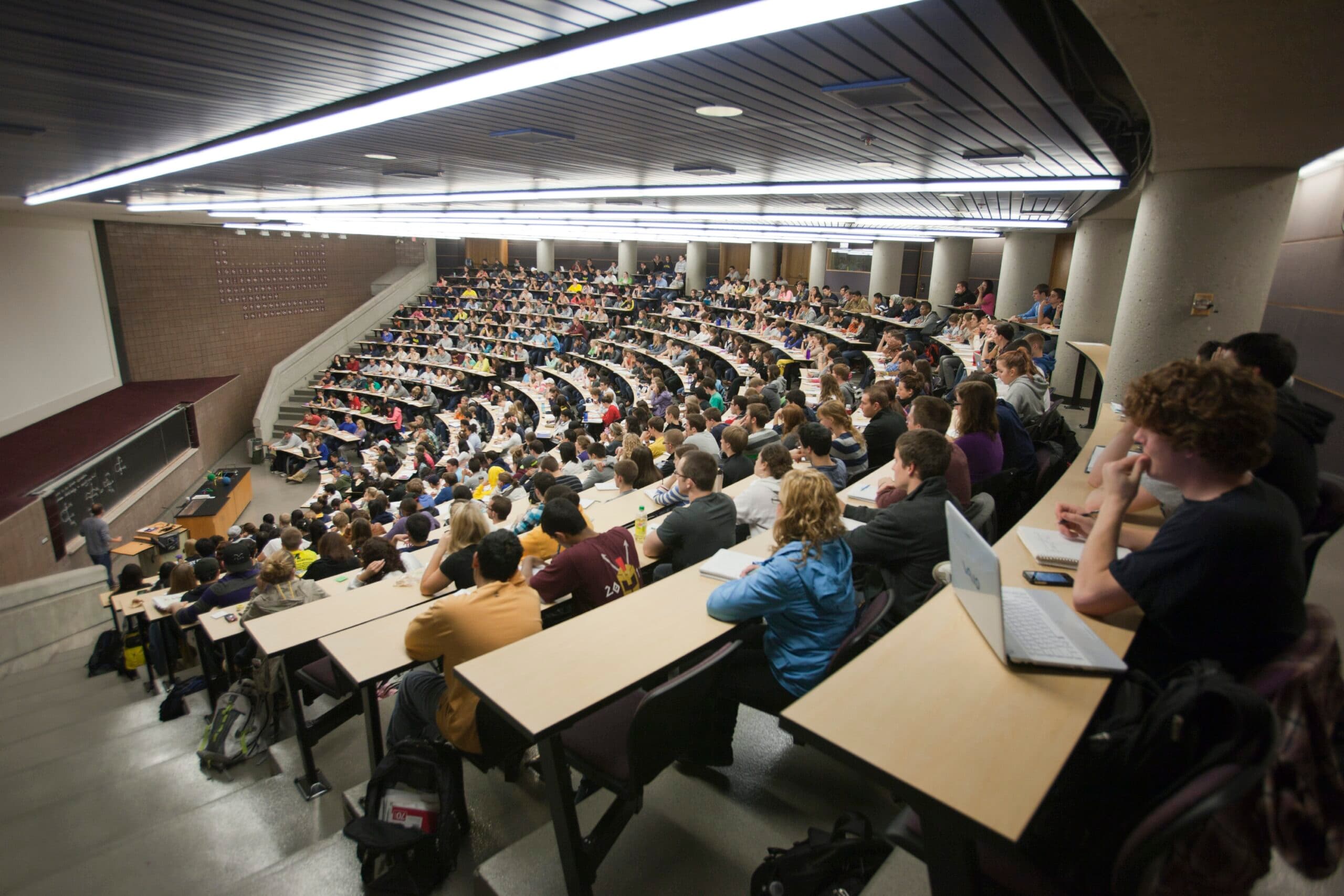
On September 28th, 2026, the University of Michigan officially suspended its new LSA pass/no credit pilot program—all contained in a letter sent to LSA’s leadership written by President Grasso. Originally announced in August of 2026, the program would have made freshman students in Michigan’s college of Literature, Science, and the Arts receive either a ‘pass’ or ‘no credit’ in all first semester courses, replacing the traditional letter grade system. Obviously, the program was not without controversy: President Grasso directly outlines the “extensive media coverage, much of which consists of distorted narratives about our intentions and, most concerningly, about the academic strength and resilience of our students”.
Though the Michigan Daily’s coverage was brief, I believe this decision holds a large amount of weight for both students here at Michigan and the higher education sphere as a whole. Firstly, this is not the first academic protocol of its kind. For example, the Massachusetts Institute of Technology has all freshman students in their first semester under a pass/fail system, a policy which has been in place since 1968. Additionally, Brown University allows all students freedom to choose how their course grades are portrayed: either as an A/B/C/no credit, or satisfactory/no credit for nearly all classes. We see more conservative versions of Brown’s policy all across college campuses today. So, given MIT’s near 60-year policy and other colleges’ course grade freedoms, why was the University of Michigan’s policy so controversial?
In part, the university’s own students were divided on the effectiveness of the policy. As the New York Times reported, our own student body president, Summit Louth, asserted that the grading policy was “an incredible thing”. Another student felt so opposed to the “coddling of a generation that has already been coddled too much”, they felt the need to write an op-ed letter to the editor to the Washington Post, only ten days after the policy was announced. Both opinions are passionate in the opposite directions, both are statements penned by current students, only 20 and 21 years of age, respectively.
The university’s own staff also feel divided on the topic. One Graduate Student Instructor, a Teaching Assistant employee of the university, said, “The policy would have addressed students’ transition into college, while also easing the workload off of its own employees”. They did not know that the program had been suspended when I interviewed them, and were disappointed to hear about President Grasso’s decision, adding that it was a shame that the university did not include the input of those who would be directly impacted by the policy, but rather the opinions of American media and high-ranking Michigan officials.
Justia, a legal news source, provides a different narrative. According to Michael Dorf, the University of Michigan’s new grade policy “fits the coddling narrative perfectly”, which he attributes to Fox News and the broader political culture war. However, blaming the issue solely on conservatives is not without fault, as the Washington Post, a traditionally left-wing newspaper, published an article comparing the policy to giving students “participation trophies”. Despite this discrepancy, I do believe national politics play a role as to why the University’s new policy was such a contentious issue. The Trump administration has been vocal about its disputes with America’s system of higher education, citing concerns over the lack of a “meritocracy” being found at most universities, as well as its extensive war with DEI, a battle fought right in the middle of Ann Arbor last year.
Finally, we must compare the differing motivations behind the freshman policies at MIT and the University of Michigan. MIT’s program was intentionally designed to help students adjust to a new, highly specialized academic program when coming from high school. Michigan’s policy was stated to primarily address college students’ mental health, which is the second highest cause of death amongst college students. Unfortunately, mental health is a topic which is highly divisive and controversial in modern society, and Michigan claiming that its new policy was designed to assist with their students’ mental wellbeing has been attacked by both sides of the political aisle.
Based upon the swiftness and harshness of the journalism published after the protocol’s announcement, much of the commentary was unprepared for colleges to begin implementing grade-alternative solutions for college students. Rick Hess of the American Enterprise Institute told the New York Times that the program would “create entitlement”, and that the rigor of college courses should actually be increased. Mental health simply is not a good enough reason for many journalists and education commentators to support the change.
According to the 2024–2025 Healthy Minds Study, based at the University of Michigan, 2% of college students reported attempting suicide in the past year, and 11% reported suicidal ideation, falling from 15% three years prior during the pandemic. Ranking above suicide as the leading cause of death amongst college students is ‘accidental death’, oftentimes the result of alcohol and drug related incidents. According to the National Institute on Drug Abuse, about half of people who experience a mental illness will also develop a substance use disorder at some point, and vice versa. Among young adults aged 18 to 25, 13.5% had both conditions in a single year. This evidence is clearly opposed to the commentary surrounding Michigan’s new policy.
In my opinion, the policy simply would not have addressed the true mental health crisis Michigan wishes to address. The lack of grades for these early classes does not represent the true rigor of a University of Michigan education. My most difficult classes occurred at the 400-level of my studies, in particular Economics 401 and 402. These classes would not be impacted by the new policy proposed by Michigan, and yet experiencing the challenge of these classes has changed the way I approach all my studies today. In addition, mental health should be a good enough reason to employ the program, if it properly addresses it.
From wherever you approach its effectiveness, this proposal has only just scratched the surface of an issue present in both America’s higher education system and journalism: young adult mental health is a topic which proves to be highly uncomfortable for many adults to discuss. To me, it is a shame that the merits of this policy were attacked, not because the classes being affected are low-level, but because of the reasons which the University of Michigan wished to address. Mental health in college students, and young Americans overall, is a pressing issue. I understand that the University’s program likely would not have impacted mental health in the way it had hoped; however, attacking the problem of mental health amongst college-age adults in America by dismissing it (George Will claims mental health is “a self-fulfilling diagnosis), fails to tackle an uncomfortable, yet increasingly real problem.