A Conversation with Eric Veal Jr.
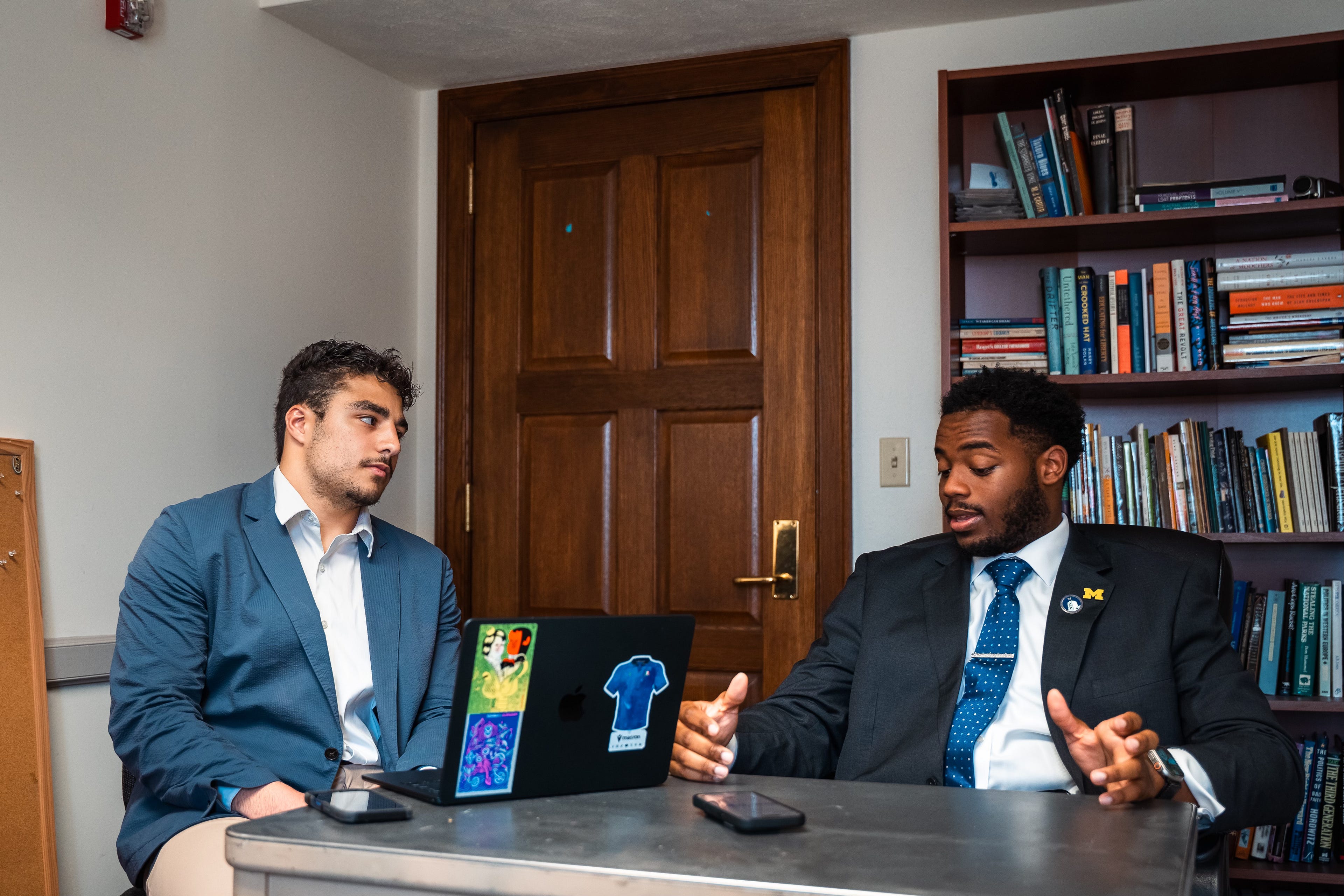
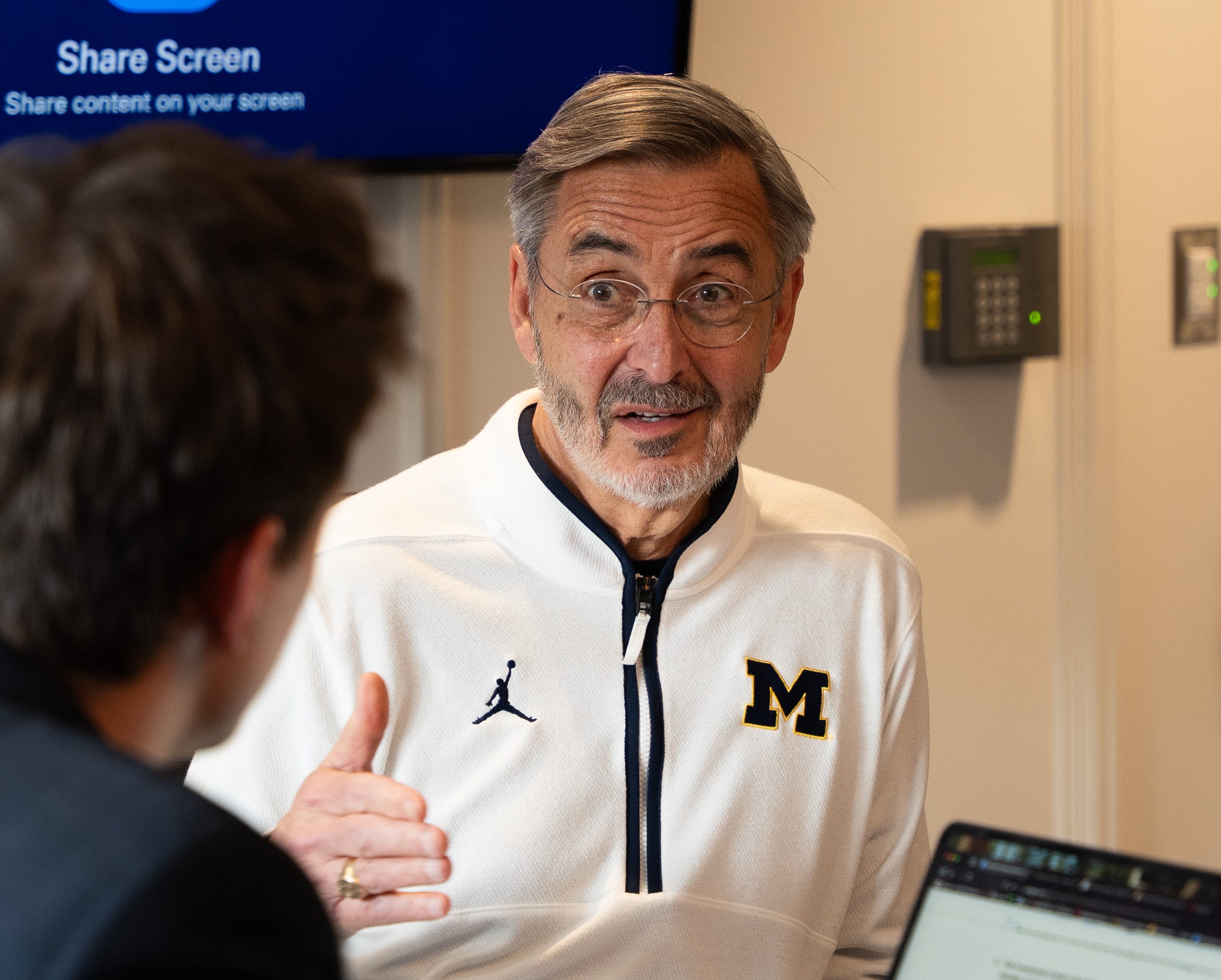
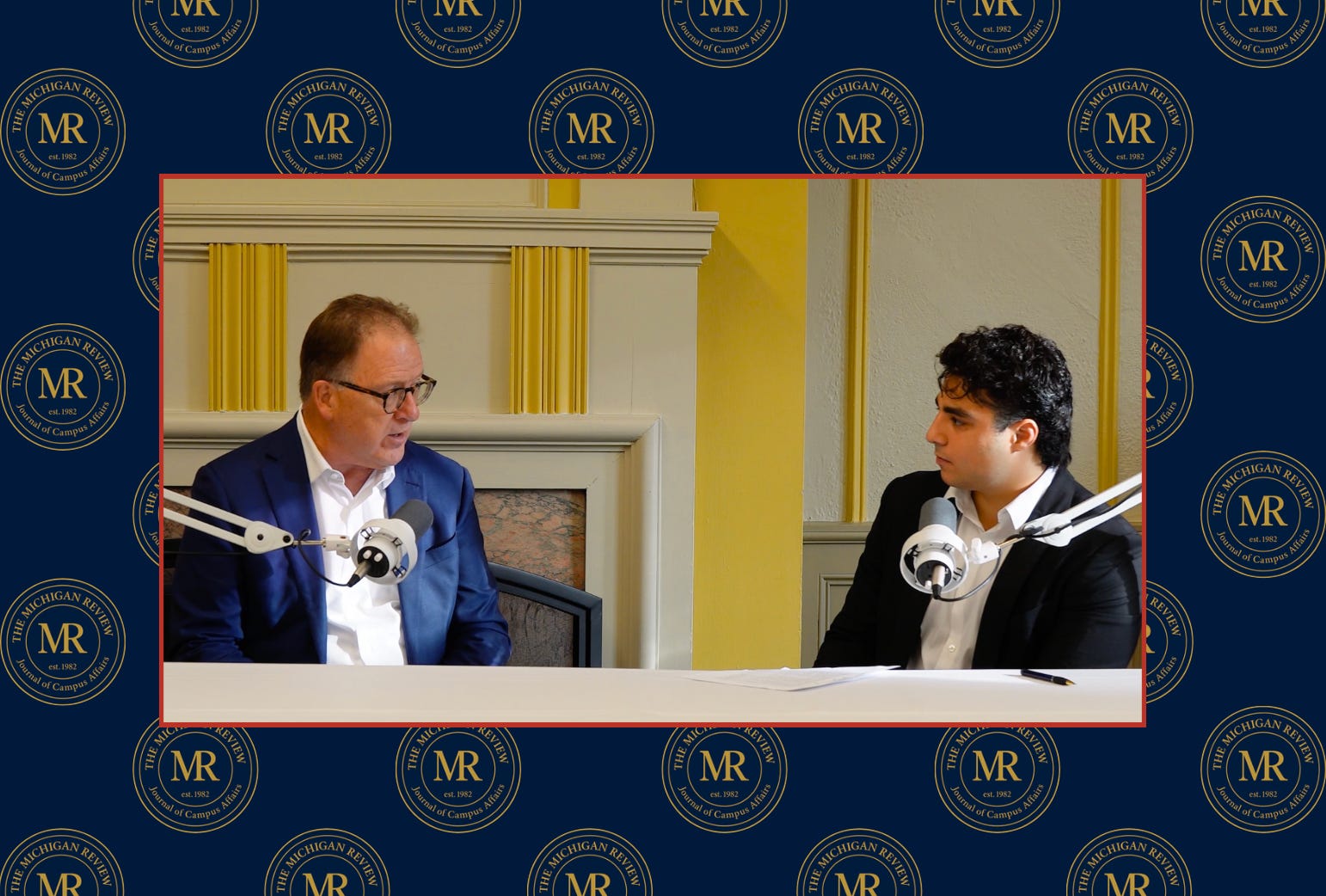
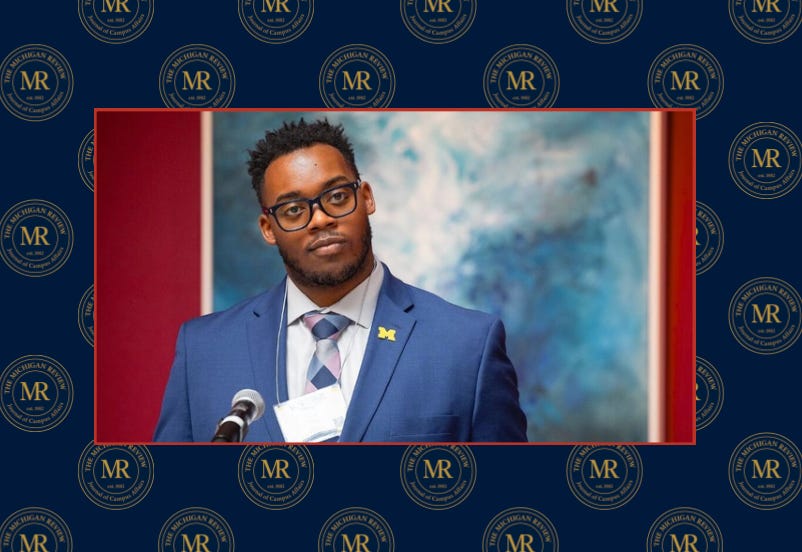
The Michigan Review sat down for a conversation with outgoing Student President, Eric Veal Jr. Here are the highlights from our time with him.
Successes and Challenges of his Administration
Mr. Veal was most proud of, as he put it, “asserting dominance over the Big 10”. “It is not a week [that] I don’t get a call from another student president asking me about some program that we’re doing or an idea that we’re doing,” said Mr. Veal.
Along with that, he stressed the success of cross college cooperation. He used the Lyft program currently so successful at Michigan as an example. “As much as I dislike them, [Ohio State] had a Lyft program that we saw as a huge success there, and that’s where advocacy started for the program here.”
Speaking on the bureaucracy of student government at Michigan, Mr. Veal stated that “there were times that Assembly and I might not agree on everything…but at the end of the day, we all have the same goal, and that’s serving our students…It’s imperative to work all together.”
Veto of the “Divest for Humanity Act”
Mr. Veal’s veto of the “Divest for Humanity Act” was the defining moment of his term. We gave him a chance to explain the behind the scenes of his controversial choice. “I made my decision not based on my own views on the conflict…I made my decision based off my view on campus life,” Veal said. “As a student who was here during the “Shut it Down” era…the way the University works…when something is delegated, it can always be taken back…I’ve seen the impacts [across the country] that making a decision like [this bill] has had on student government being completely shut out. And that was something that I was not willing to do in a year where we were in the middle of a presidential search, [and] in a year that student voice is so pivotal and integral to every decision being made of the institution.”
When asked about how involved the federal government was with this decision, Mr. Veal stated that “I do think there would have been more federal attention put on our campus. I am not one to capitulate to the federal government, or the University either, but I am one to think strategically about the students that we have here–our international students, our students doing research, all those people that would be affected by a federal government attack on our institution.”
When asked if he agreed that whatever decision he made, it would have caused division on campus, Mr. Veal responded, “Either way, I would have had people be very upset about it…My decision to veto was not based on…ideological differences with the resolution…my decision was made on the premise that all students do matter, and this resolution in my opinion was not for the betterment of students.”
Mr. Veal also was clear that the decision was his and his alone, not shared with Vice President Korn. He stated that, “Lucas Korn had a conversation early on in our administration about the way things worked. And I was a firm believer as president, anything that I signed, vetoed, or pocket voted is my decision. As president, you are the one whose name is affixed to it.”
Mr. Veal then revealed that he had received threats after his veto, saying “I had started getting death threats as soon as it passed...the threats increased throughout the end of first semester…”
Human Rights Party Win
The Human Rights Party won CSG’s presidential election under the Louth-Perez ticket. We asked Mr. Veal, being part of HRP’s rival Empower Party, why he thought HRP was able to gain traction. “You have a message that resonates with students across campus, and students have a decision. When we beat the Human Rights Party, we beat them in a pretty sizable margin…and then they came and bested us. That’s fine.” Mr. Veal continued, “I think Summit was able to mobilize students across campus, just like anyone else could. I don’t think there’s anything special.”
When asked if there was anything specific that went wrong, Mr. Veal responded, “People have cited, you know, if you would have just signed [the divestment bill] it would have been different. But at the end of the day, I was elected to represent our own students. And if I don’t think [a bill] is going to do that, I’m not going to do it…I don’t think there’s anything in our presidency we could have done differently. And so, I have no regrets…I regret that we couldn’t hit the ground faster!”
Advice for the President Louth
Mr. Veal said that the biggest piece of advice he could give to incoming President Louth is to, “...become a president that he can be proud of. When you’re in the presidency, it’s lonely at times, and you got a lot of people that want to tell you want to do. That is something that I was not okay with. So, for me, I told people from Day 1: unless I ask you, you’re giving me words to say for someone else. And a lot of members of our team respected that. And that made us so much more successful.” “The biggest advice I have,” Mr. Veal continued, “is to lean on people who you believe have the best interests of this institution.”
What Did the Presidency Teach Mr. Veal?
The outgoing president stated that the presidency helped him to learn how to “pick your battles.” He continued saying, “A lot of people are going to try to punk you. But you can’t let them punk you out…You want to make sure that at the end of the day you’re supposed to work with these people. And, you know, some of these people in this assembly made comments about my race, and made comments about me overall. And were some of the prime people that called to incite violence against me. And so to me, I have to sit there with them every week, and I have to work with them, and you’re the same person that liked the video that said you wanted me to be physically harmed. And then at the end of the term, I talked to one of them and they said “Oh, I never did that. That never happened.” I was like, no, I see it right there. I see it.”
Mr. Veal continued to say, “People are going to have opinions no matter what. And if people have opinions, let them have them. And I’m gonna listen to them. But that’s not going to change the way I view myself. And so I always told myself, there are going to be decisions I’m making this presidency that I might not personally agree with, but I need to make sure that anytime I have to communicate them, I need to come around them in my morals, and ground them in my ideals, and that communication.”
He also spoke of how he kept his sanity. “I worked out like 2 hours a day, and I lost 80 pounds” Mr. Veal said. “During the presidency, you are stressed, but you also need to find good habits. I refused to give up my social life, too. Every Thursday night, I will go out with my friends. That was a non-negotiable for me every week…That is exactly how I dealt with the entire presidency, because if not, you will lose your mind…”
He then spoke of a story about how the death threats he received affected him. “Like I said, I had people saying that they wanted to put a bullet through my brain. That was a direct quote. And I had to have a police escort to class…We had an event in the diag, right after [the divestment crisis] really blew up…and the university was like “I don’t think you should attend this…with the threats increasing, maybe you should consider just not going.” But I was like, “NO”. My whole team is gonna be there. And they’re expecting their president to be there. So I’m gonna be there. So the university gave me security, and I’m walking around the diag…there was this guy in this all black trench coat standing 6 feet behind me at all times. And so if I took a step, he took a step. It was such a crazy experience, but I never let it bother me.”
What’s Next?
When asked if he has ambitions for politics, Mr. Veal responded, “the end goal is to always make it to, you know, being an electorate. Awesome. I love serving people. I think the presidency was a great opportunity to do that. You know, I always like to joke, I have a larger constituency than the mayor of Saratoga, Florida. And I think that’s so funny…There are 50,000 students: undergraduates and graduates, people who are way older than me, and people who are coming in at 17 and 18…it’s a really great experience.”