Interview: Grasso on AI, Free Speech, Football, and Life After Michigan
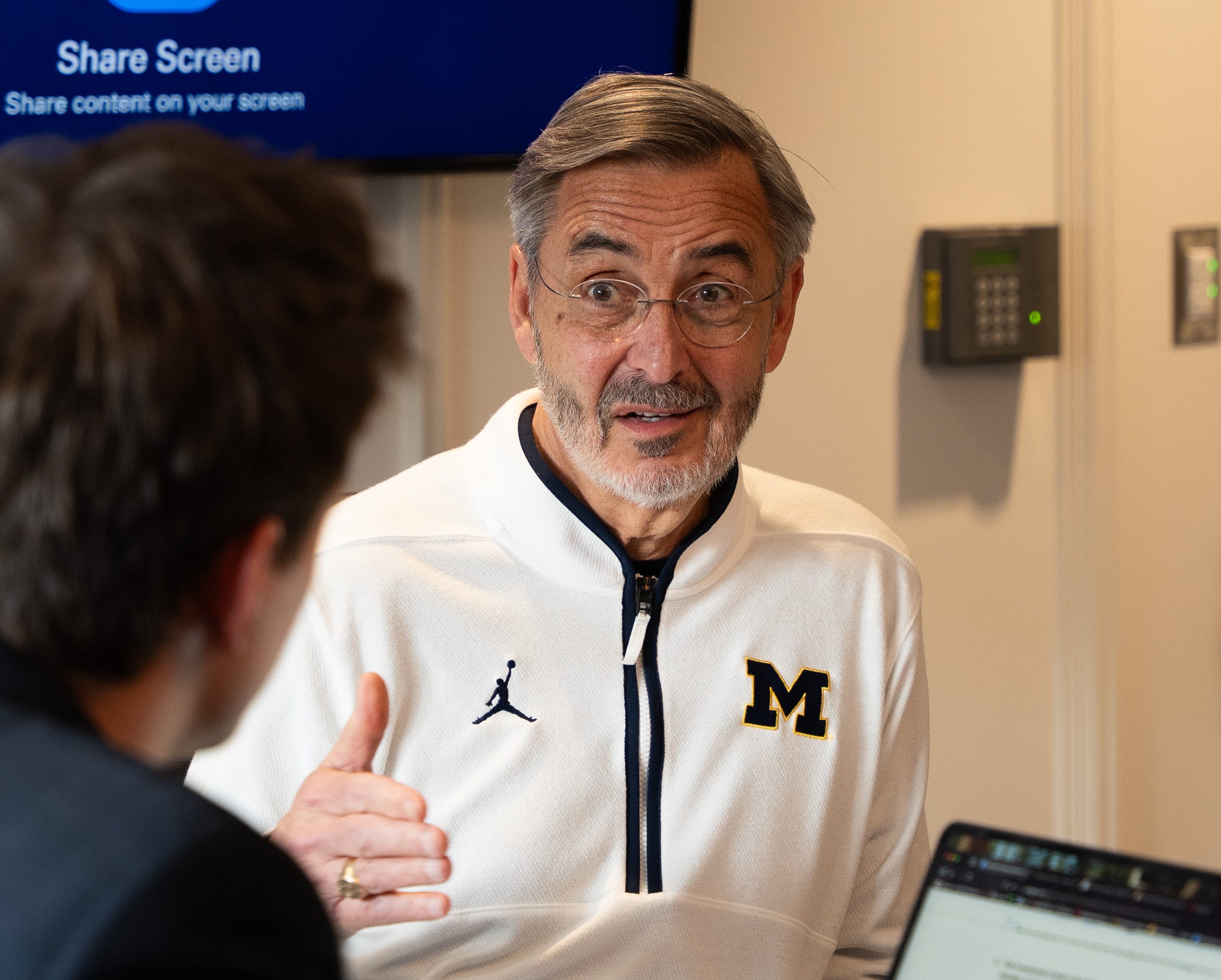
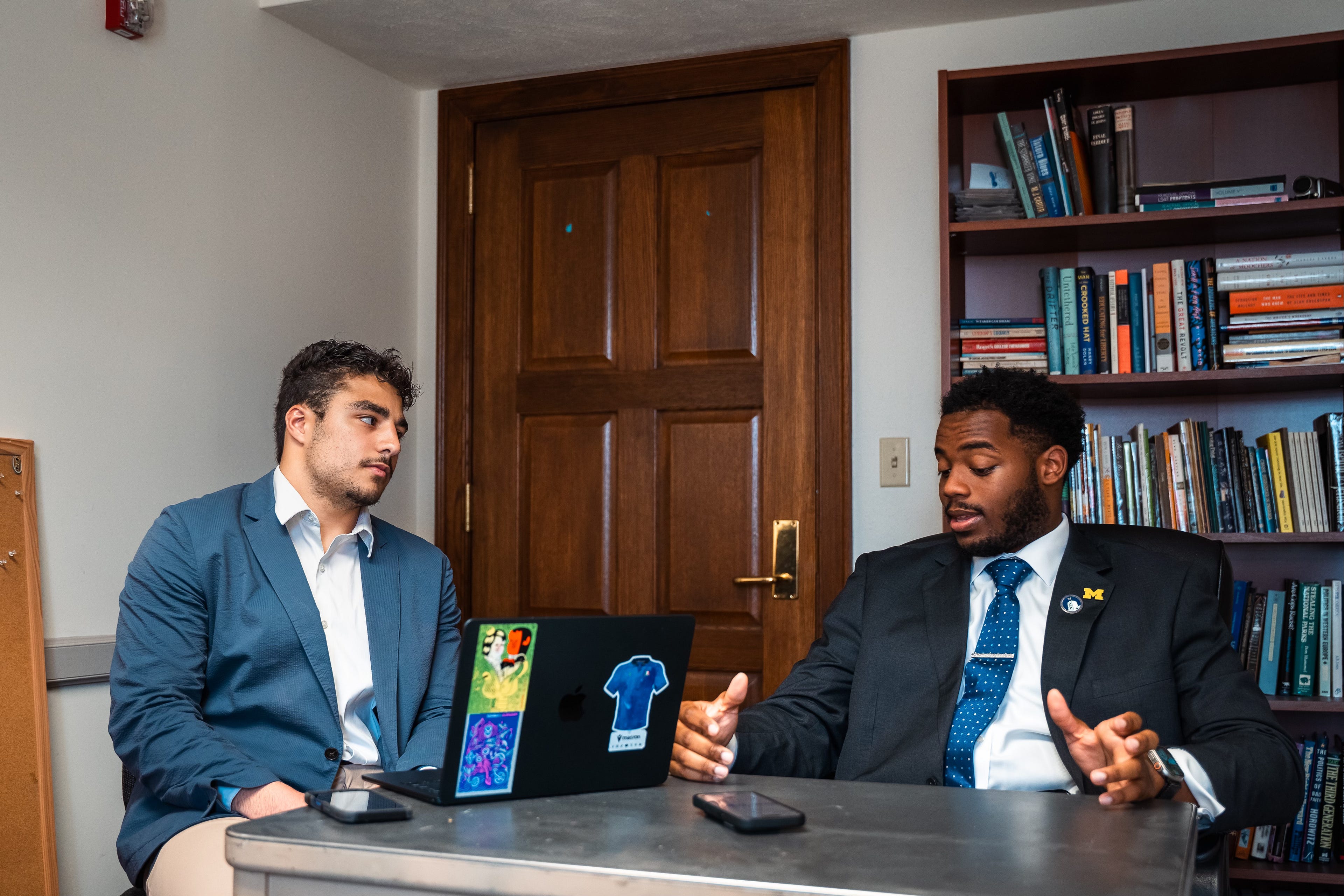
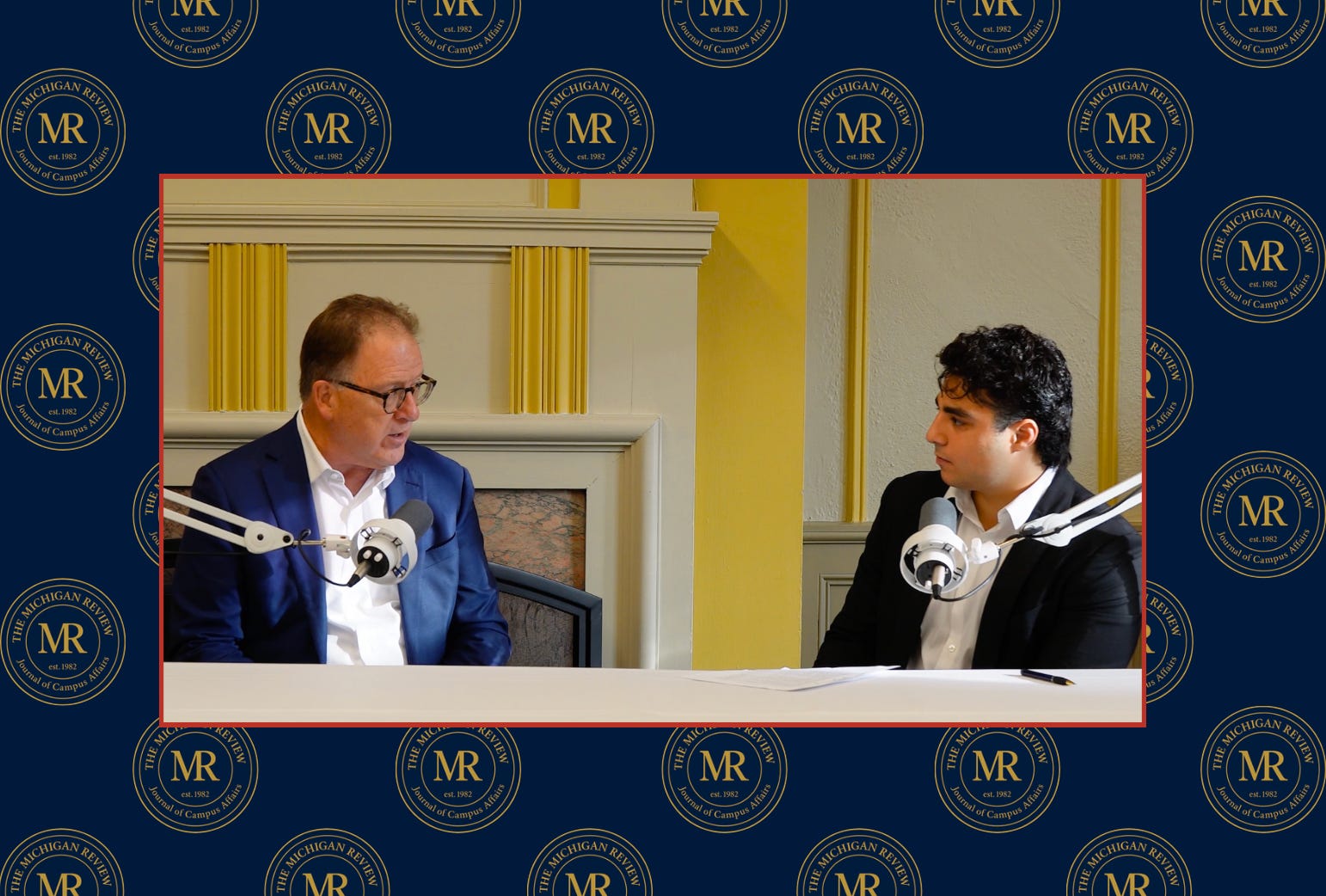
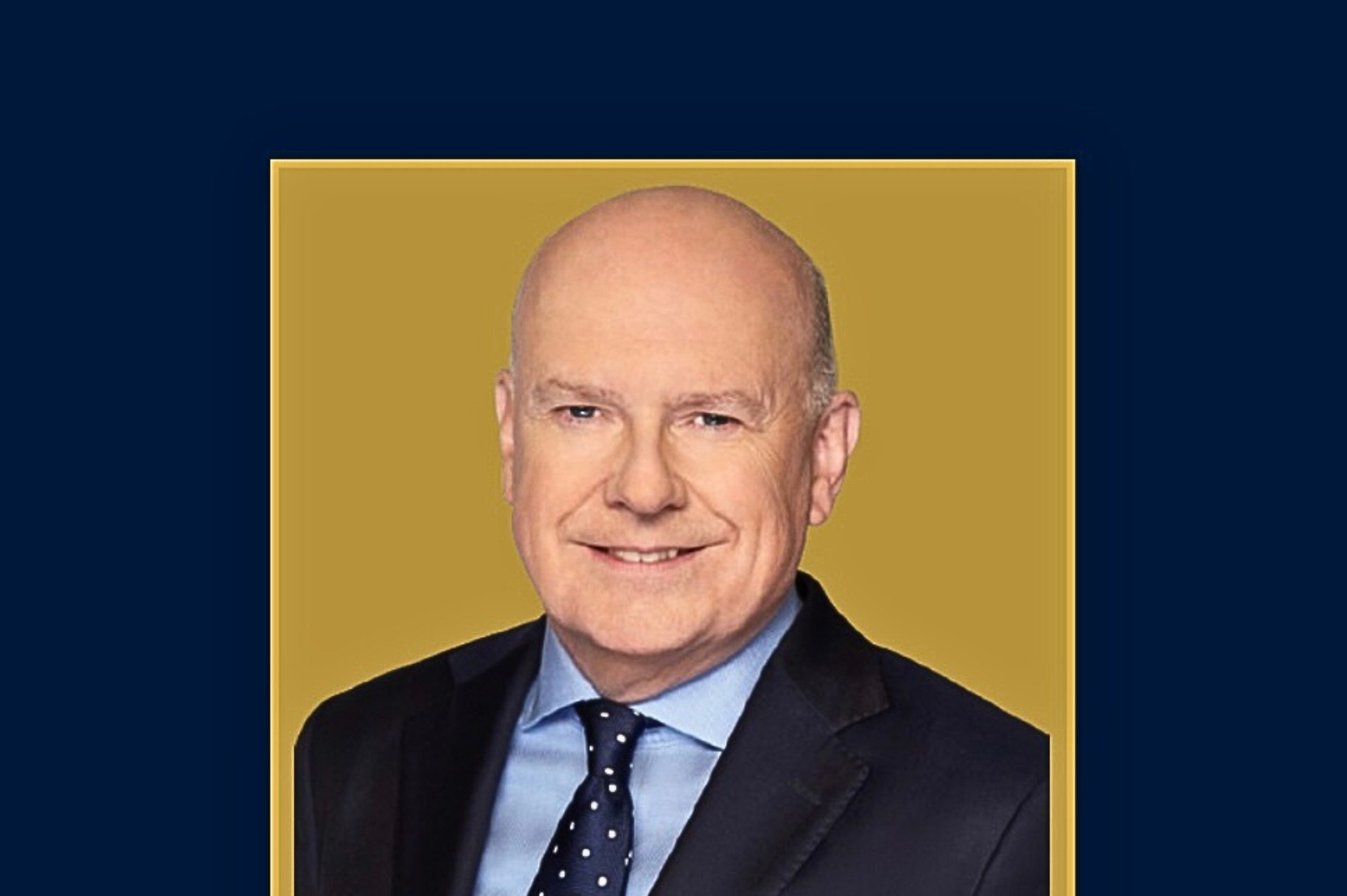
This is the transcript of The Michigan Review's interview with Interim President Domenico Grasso, where we discussed AI data centers, the selection of Kyle Whittingham, free speech, divestment, and “framemogging.” The questions were provided beforehand, with the exception of two follow-up questions. Minor grammatical edits were made.
The Michigan Review: During your tenure as interim president, the university has undergone significant changes, including major investments through Look to Michigan. What do you think your greatest accomplishment during your tenure at the University of Michigan is or will be?
Domenico Grasso: Well, thank you for the question. First, I want to say that I think the university is in a much stronger and more stable place than it was a year ago when I took office. When I took office, we laid out some of our priorities. One was that we wanted to make steady progress on previously announced projects. We had this thing called Vision 2034. I took a look at that, and it looked like it was more of an anodyne description of what we were going to do, so we reinvisioned that, and it became Look to Michigan and Look to Michigan Strategic Plan, and then it became a media campaign. We invested money in it, and that was, I think, probably one of my biggest accomplishments.
Campus Plan 2050 and other efforts were also part of this as well. We made a very strong commitment to listening and engaging with individuals throughout the community. We can continue to pursue our mission and commitment to our values. I was attempting to lay a sound foundation for our next president, Kent Syverud, who is going to be starting here in just a few weeks.
MR: During your tenure with the University of Michigan, from serving as chancellor of the Dearborn campus to your current role as interim President of Michigan, you have witnessed the University both with and without AI. Are you optimistic about AI’s impact on academia? How will AI change the university in the coming years?
DG: AI is going to be a powerful force to reckon with. Let me just start by saying that those who cannot use AI effectively and responsibly are going to be replaced by AI. AI brings powerful tools that can enhance but not replace our teaching and research while also potentially improving operational efficiency. We’re taking a very deliberate and thoughtful approach by engaging faculty, students, and staff from across the university and ensuring that it is used responsibly and ethically in ways that add value and strength in our mission.
MR: One of the largest financial investments during your tenure so far has been in the computational facility in Ypsilanti, built in partnership with Los Alamos National Laboratory. In September, you stated that “it’s really not a data center.” Could you please expand on this distinction?
DG: Sure, first I would like to start by saying that actually it is not one of my largest investments. Our large investments are in the Biotechnology Innovation Institute which I’m investing 250 million dollars in, and another one is the American Dialogue Center, which we’re investing 50 million dollars in. So I don’t think that this is one of the largest investments.
But let me just say that this is a specialized high-performance computing facility, not a commercial data center, as you point out. It uses only a fraction of the energy of a large-scale commercial data center. The work is to do advanced computer simulations not manufacturing or physical testing, and unlike a commercial site that is designed to generate revenue, this facility has a scientific mission. It enables our faculty and students to drive innovation in areas like medicine, cybersecurity, climate change, and national security. That improves society through discovery. It’s an investment in computational capacity to solve the world’s most challenging problems. And if you look around the country, many universities are investing in high performance data – high-performance computing centers.
MR: So there is just no revenue at all. Is it going to be purely just a research facility?
DG: We’re sinking money into it. It doesn’t generate revenue for us.
MR: As you probably know, there has been pushback against the computational facility, especially concerns around water, noise pollution, and increased energy costs. What specific guarantees is the University making to protect the environment and energy costs?
DG: We take these concerns very seriously, and they’re central to how we’re planning the facility. The facility is designed to minimize environmental impact, and as an environmental engineer, which is my discipline, I want to avoid the use of local groundwater, or the Huron River, and we want to use dedicated infrastructure that won’t impact residential grids and incorporate advanced technologies to manage noise and energy use.
The work is still in a due diligence phase of the project, so we will continue to engage with the community and regulatory partners to ensure these commitments are met. We want to minimize any adverse effects on the local community. We will want to work in partnership with the local community.
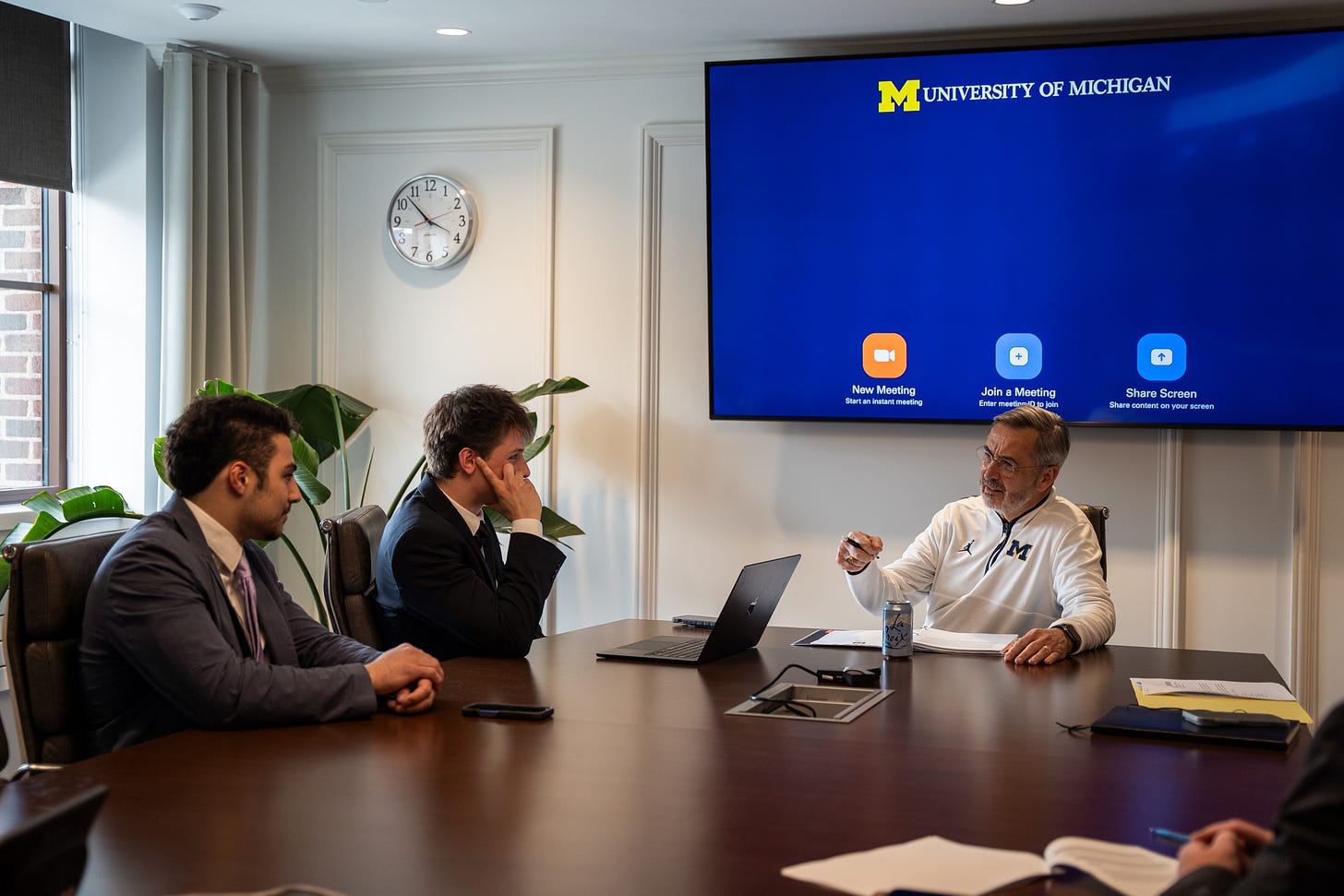
MR: The situation surrounding former Head Football Coach Sheronne Moore brought a lot of negative attention to the University. While the public saw the statement you gave following the situation, we were wondering if you could go a bit more behind the scenes, to the step-by-step process by which you dealt with the situation? Was this the biggest controversy you’ve had to deal with during your time at Michigan so far?
DG: Let me just say this: I’ve had a few controversies over my time here, and this was not a minor one, to be sure. But given the sensitivity of our ongoing review, I’m not really in a position to walk through the step-by-step details. What I can say, consistent with our approach, we’ve initiated an independent comprehensive review of the athletic department, both focused on the specific incident and on the culture of the athletic department. That work is ongoing. The review takes time, and it’s being handled with seriousness and independence. We have the goal of ensuring the department reflects our values and University of Michigan and is positioned to move forward in a positive and strong way.
MR: How involved were you in finding Kyle Whittingham? Did you have any input on his selection?
DG: Yes, over the holidays, I spent a lot of time with Ward Manuel, our athletic director, and when my wife is asked how our holiday was, she often replies that Domenico had a very nice holiday with Ward Manuel because we spent a lot of time talking about this. We made the final decision on Christmas Eve, and we pulled the trigger the day after Christmas. We decided not to do anything over Christmas. We made him the offer the day after Christmas, and I was involved in the interview process and the final offer as well.
MR: The investments inside university endowments have been the subject of criticism for decades. During your time here, there has been a push in the Central Student Government by students (who want to divest from Israel) to see how the endowment is invested. Why does the University of Michigan share little information on how its endowment is invested compared to universities like the University of California, which lists the size of its investment in weapons manufacturing, companies supporting Israel, and it lists its holdings?
DG: My understanding is that we provide actually substantial information about the endowment through annual investment reports, including companies-specific details for our public holdings. Our goal is to be as transparent as possible while also honoring the legal and contractual obligations tied to certain investments. Those requirements limit our ability to disclose every holding, but they’re essential for generating strong returns and supporting the university’s mission. I do want to point out that our endowment last year had the strongest returns of any endowment in the United States, public or private.
MR: Recently, the alt-right advocate Myron Gaines came to campus to debate any student on his opinions. Gaines performed a Nazi salute multiple times and defended many extreme ideas. As president of the University of Michigan, how much of a priority is it to you to defend the institution of free dialogue on a college campus with opinions as diverse as this one, and is there any line you draw?
DG: That’s an excellent question. First, you may know that I was in the military andI swore an oath to defend the Constitution. The First Amendment is a major part of that, and I’m committed to defending freedom of speech on this campus. As a public institution, we are bound by the First Amendment and cannot restrict or punish speech on the basis of viewpoint, even if our community finds it offensive or deeply disagreeable.
At the same time, we have a responsibility to ensure that free expression can take place without creating an imminent threat to safety, incitement of violence or disruption, or pervasive and severe harassment. So our role is to both protect free expression while maintaining a safe and respectful environment for our community. I also point out that a few years ago, we passed a new policy on diversity of thought and freedom of expression to really underscore this.
MR: As most of the campus knows by now, Kent Syverud is officially our new President Elect. How involved were you in the search to find him, and what are some pieces of advice you’d give? Is there anything you have already told him?
DG: So the board of regents led the presidential search, and they were supported by an advisory committee and an external search firm. I was not involved at all. My focus has been on ensuring a smooth and productive transition.
President-Elect Syverud and I are in regular contact as he prepares to step into the role. Given his extensive leadership experience and deep familiarity with the University of Michigan, he is well prepared to step in on day one. Of course, he knows that I’m always available if I can be helpful. I have great faith in his leadership.
MR: You’ve had quite the eventful tenure here at Michigan. What are your plans after? Do you intend to stay in academia, or is there another path calling your name?
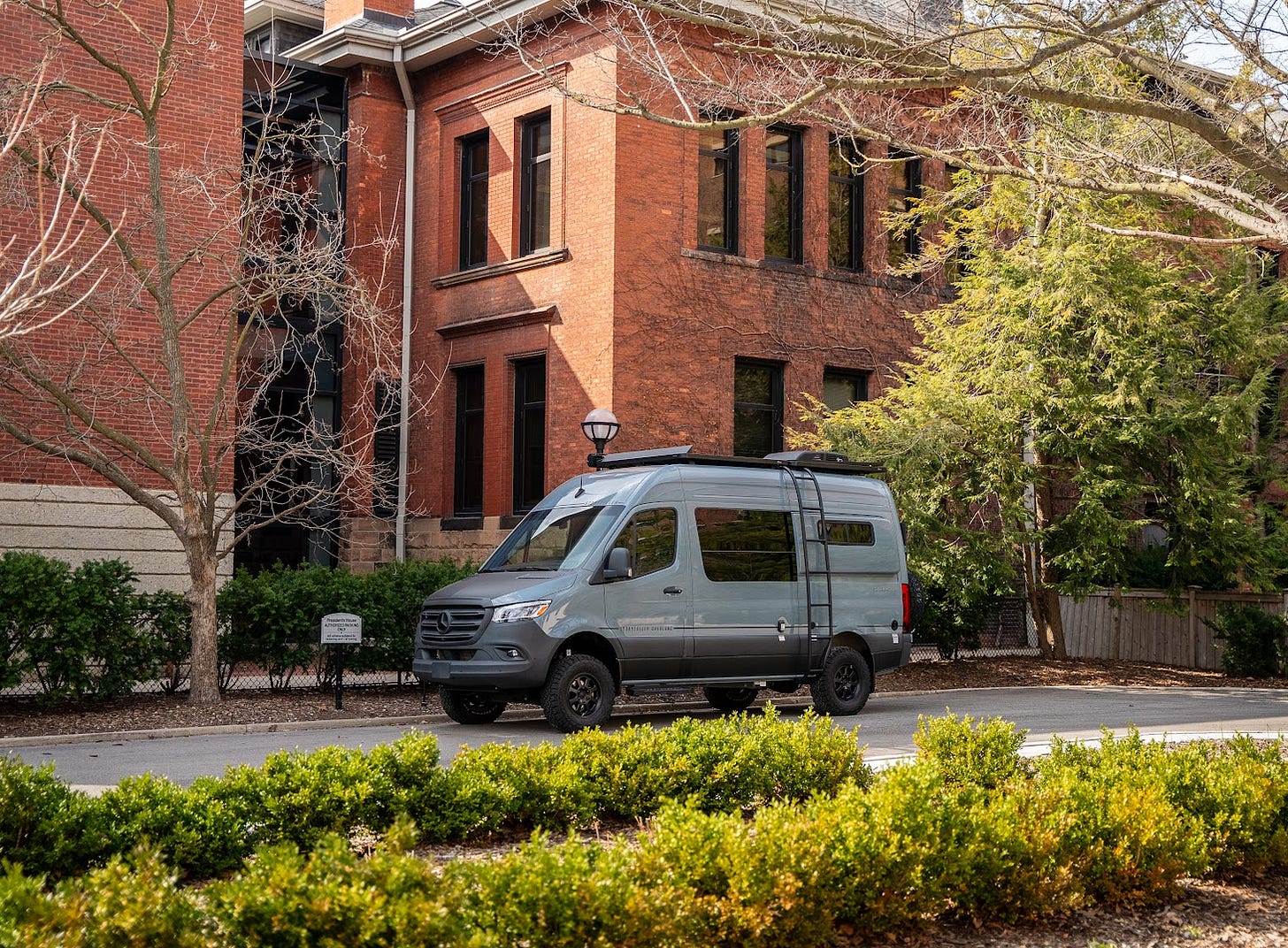
DG: I don’t know what the future holds, but I can tell you what we have in the near term future. My wife and I bought a Sprinter van; it’s an off road sprinter, so it comes with solar power. We’re looking forward to exploring parts of the United States and Canada we haven’t seen yet.
MR: Do you have a first location you’re going to go to?
DG: We haven’t thought that through, although we just took it up to Sleeping Bear Dunes. It was very cold up there, and the van was beautiful in terms of keeping us warm. If you want to get a picture of it, it’s sitting in front of the president’s house, so it’s probably the first and only time there will be a sprinter van outside of the president’s house.
MR: Now, we wanted to end this interview with a funny question. What is your favorite slang term that you’ve heard as president of the University of Michigan?
DG: I can’t answer this one well. I’ve heard a lot of slang terms, and I’m not keen on a lot of them because I don’t think they’re good for public consumption. Let me ask you what your favorite slang terms are.
Reporter Isaac Gardner: Mine would probably be framemog. I don’t know if you’re familiar –
DG: What?!
Gardner: Framemogged is like when you’re bigger than the person next to you, and you look bigger than them.
DG: Okay… (laughs)
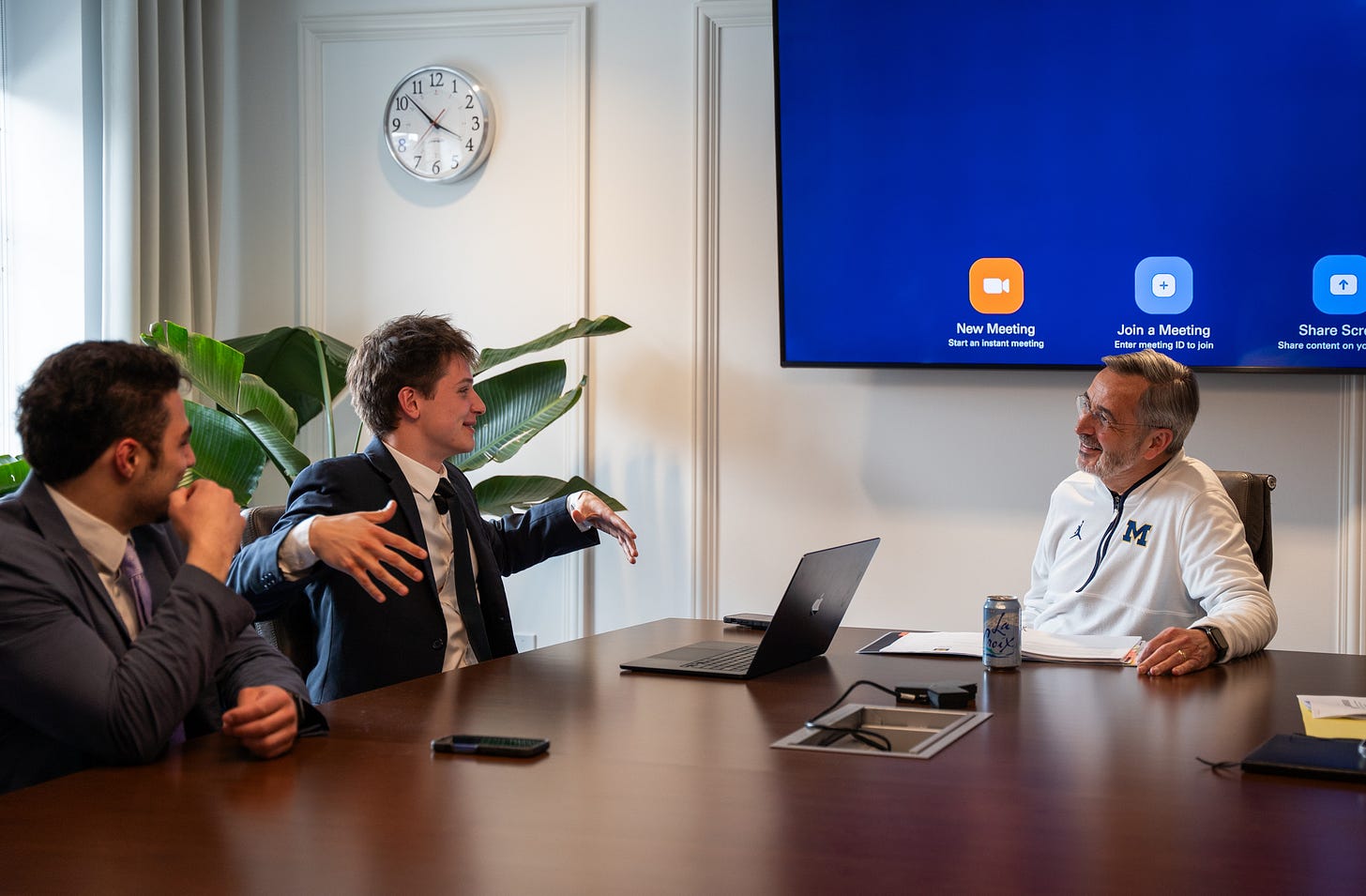
Reporter Luca Desanto: Mine is probably chud. A chud is someone who is lower. Like, if I’m just a chud, it’s just yeah, I’m just a disappointment. I’m a goober, that’s another slang term.
DG: I was just a goober! That goes back to the 1950s. I’ll just tell you one thing that you should consider. Go Blue. It’s not slang but.. are you Italian?
Desanto: Yes, sir, I’m Italian.
DG: So you know the word ciao, right? Everybody knows ciao. You say ciao when you meet somebody, you say ciao when you leave. Go Blue is the same thing. You see someone, you say Go Blue. You Go Blue when you leave. It’s all being part of the same family. I can be in Tokyo or Buenos Aires and somebody sees the block M and they’ll say “Go Blue!” It’s just like being in an Italian family and saying ciao. So I think Go Blue, it’s not slang, but it’s my favorite term.