Wazoo Records: Where the Music Never Stops
From indie-rock elitism to a new generation of vinyl collectors, Wazoo Records has witnessed a transformation in how people discover, consume, and appreciate music.
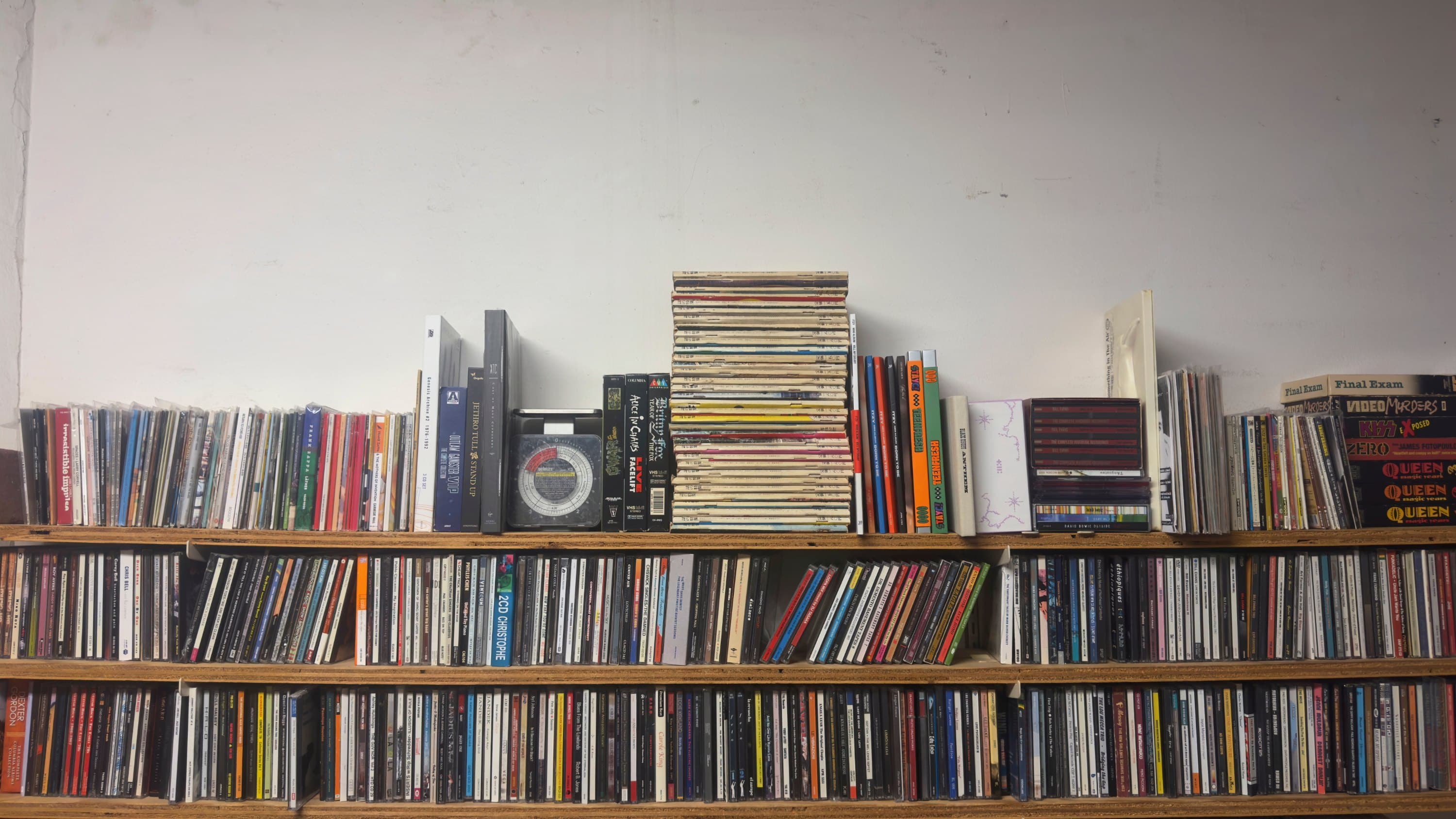
In an era when nearly every song imaginable is available at the touch of a button, one might expect record stores to be a relic of the past. Yet, hiding away on the second floor of a building on South State Street, Wazoo Records has spent more than half a century defying that expectation.
Founded in 1974, Wazoo has survived the rise of CDs, digital downloads, and streamers, all while remaining a fixture of Ann Arbor. Today, the store is experiencing another shift in music consumption as a new generation of University of Michigan students has begun to see the appeal of owning physical music.
For owner Forest Juziuk, who has spent much of his life working in record stores and the music industry, the revival has been surprising, particularly when it comes to CDs:
"If you'd asked me years ago [if CDs would make a comeback], I'd be like, not in a zillion years," he stated.
But the return of physical music is only one part of a much larger transformation. Having worked at Wazoo from 2002 to 2011 before eventually returning as its owner, Juziuk has witnessed a fundamental change in Ann Arbor's music culture, from a community once divided by niche, somewhat elitist subcultures to one characterized by non-judgmental tastes.
According to Juziuk, one of the most dramatic changes in Ann Arbor's music scene is the disappearance of the subcultures that once defined it.
When he first worked at Wazoo, the store catered primarily to indie-rock fans. Musical preferences were often tied to particular groups of people, with fans identifying themselves through specific bands, genres, and record labels.
"You had people that liked Neutral Milk Hotel or something. It was one scene. And you had people that liked Interpol, and that was a different scene," Juziuk recalled.
These groups were often somewhat snobby and competitive, eager to go taste for taste.
Juziuk remembered an encounter in which a woman excitedly picked up an album by The Dismemberment Plan, only for the man she was on a date with to patronizingly correct her, telling her that the album was not good.
The interaction struck Juziuk as emblematic of the sort of pretentiousness that characterized parts of indie-rock culture.
Today, people seem to be very different in his eyes.
"Genre is not nearly as important. Scenes and labels are not nearly as important," he explained. "People find out about more stuff from each other and are [more] open to checking it out than it used to be."
At Wazoo, this shift is shown in the records that students often purchase. Jeff Buckley's 1994 album Grace is one of the store's most consistent sellers, with music from contemporary artists such as Tyler the Creator, Charli XCX, and Chappell Roan selling nicely as well.
"Jeff Buckley [is bought] every day, every single day," Juziuk said.
Juziuk also believes that the influence of individual record labels has dwindled. In the past, discovering a favorite band often meant exploring other artists signed to the same label because labels had particular identities and signed particular types of artists. Today, listeners hardly ever view record labels as a guide to listening to music.
"I don't necessarily think that tribalism through the labels is as important or even as interesting as it used to be," he said.
For Juziuk, this represents a welcome change. Rather than looking at music as a competition over who has the most sophisticated, niche taste, younger people seem more interested in both shamelessly liking what they like and being open to discovering something new.
Perhaps the most surprising development in Wazoo's recent history and music culture in general is the revival of physical music among Gen Z who have grown up in the streaming era.
For many Gen Z listeners, music has always been something intangible, that was listened to through devices. Owning a physical album can therefore feel like a new experience.
Juziuk recalled one customer who had recently discovered that albums were more than arbitrary collections of songs.
The customer explained that they had only just learned how musicians record groups of songs and put them in a specific order to create a work that is greater than the collection of its songs, ergo the album.
For someone who is used to listening to music through playlists and individual songs, the concept was mind-blowing.
Juziuk found the encounter both funny and interesting:
"If your world has been built around a different concept of [music], and then you discover that albums are a concept. That's amazing," he said.
This curiosity extends to CDs as well, which Juziuk assumed would never become popular again.
Some customers enter Wazoo without having any idea of what they want. Instead, they just want to buy CDs and discover whatever they discover.
Juziuk recalled asking a customer what kind of music they liked after they requested recommendations.
Their response was simply, "CDs."
Although he initially found the answer strange and sort of hilarious, he came to appreciate its openness.
"It's way more exploratory and open," he said.
For Gen Z, the appeal of physical music may also come from the effort it takes to listen. While streamers offer easy and almost unlimited access to music, they can also make listening feel transitory.
A physical record requires more from the listener. In order to listen to a record, one has to find an album, purchase it, and, if they actually want to listen to it, they have to use equipment that allows them to do so.
Of course, not everyone who buys records actually listens to them.
Some consumers are more drawn to the artwork on an album, its rarity, nostalgia, or simply the satisfaction of owning something.
Juziuk sees little reason to distinguish between these motivations.
He recalled purchasing DVDs before he even owned a DVD player, simply because he wanted to own films that were otherwise difficult to find.
"I totally think anybody should collect before they actually own a player," he said.
While the revival of the record and CD has benefited Wazoo, the store lives on in a very different Ann Arbor from the one Juziuk remembers.
Decades ago, downtown Ann Arbor was home to numerous record stores, many of which were located within a few blocks of one another.
Today, many of those businesses are gone.
This decline reflects the broad changes that have happened recently in the music industry, but also shows how hard it is to own a small business in downtown Ann Arbor.
According to Juziuk, affordable rent has been one of the most important factors in Wazoo’s survival.
Another element of their success is that they have done an excellent job in maintaining a music collection and environment that attracts a wide variety of customers, both young and old.
This can be attributed to Juziuk’s eclectic taste but also to some of his employees who know exactly which artists and records are popular at the moment. One employee, Victoria, regularly recommends albums that sell almost immediately after arriving at the store.
The result is a business that has survived not by resisting change, but by embracing it, while still being faithful to its older customers.
The clearest illustration of this phenomenon came when a woman visited the store with her college-aged son.
As she climbed the stairs, she began noticing something strangely familiar about the surroundings.
After asking how long the store had been there, she started to realize that she had been there before when she was a student at the University of Michigan.
She had moved away after graduation and had forgotten about the store, but its smell and atmosphere brought its memory back to her.
The woman proceeded to purchase approximately $150 worth of records, including a lot of Joy Division records and a Lana Del Rey record for her son.
For Juziuk, the encounter was a reminder of the store's unique place in Ann Arbor's cultural history.
"A lot of people have a relationship to the place," he said.
Wazoo has endured not simply because people continue to purchase records, but because it has become part of the experiences and memories of generations of Michigan students.
For all the changes in technology, musical tastes, and the city itself, Wazoo continues to offer something that the Spotify algorithm cannot: the chance to walk into a room full of records, find something unexpected, and leave with your mind blown.