Pop Music: In Dire Need of a Messiah
Pop Music has become increasingly commodified, prioritizing mass commerical appeal over genuine artistic expression.
Taylor Swift. Olivia Rodrigo. Sabrina Carpenter. Benson Boone.
These are the pop artists that have ruled the charts in the past couple of years. What do they have in common, you might ask? Well, they all write derivative chord progressions, with catchy but predictable melodies, and over-rely on production and stage antics to mask the banality of their songwriting.
That may sound harsh, and honestly, these artists aren't all bad (except for Benson Boone). Specifically, I really enjoy a lot of Olivia Rodrigo's songs and thought she was building towards something with Sour and Guts, until she took a step back with the utterly bland you seem pretty sad for a girl so in love. Taylor Swift can at times be lyrically interesting and does an impeccable job of being relatable to her audience. Sabrina Carpenter has a very cohesive artistic identity and has a knack for fun melodies.
But despite their talents, these artists are symptomatic of a greater problem: a pop music environment that has deteriorated to where artistic expression has become secondary to commercial success.
Rather than labels and artists being the arbiters of taste as they were in the past, they have become sycophants to the consumer, making music to satisfy market demand rather than to create it.
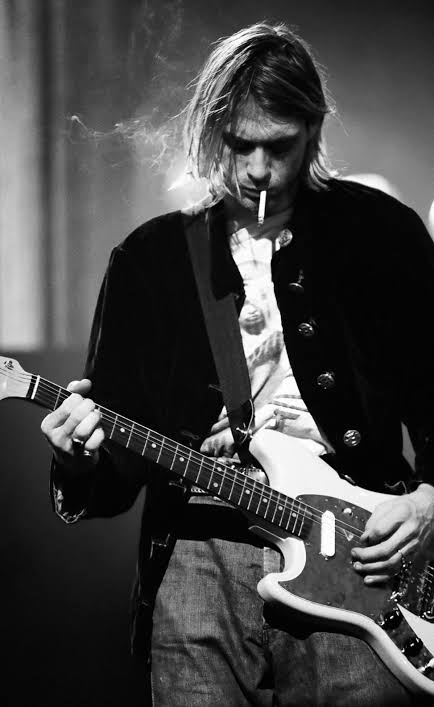
In the past, labels would take chances on artists who didn't fit the mold, who the taste-makers at labels thought could make a big impact on the musical landscape. Kurt Cobain and Nirvana were among the most consequential bands that emerged from the labels' readiness to take risks.
As Noel Gallagher of Oasis rightly remarked, "The consumer didn't f*king want Jimi Hendrix, but they got him...And the consumer didn't want the Sex Pistols, but they got them. The consumer doesn't know what he wants. You f*ing give it to him. And he likes it."
Nowadays, record labels are favoring music designed to appeal to the largest possible audience, prioritizing commercial efficacy over any meaningful sort of artistic experimentation, which has led to greater homogeneity in pop music. This is especially apparent when it comes to familiar harmonic structures, production techniques, and a vapidity, a generality, and somehow a sanitized sexuality in lyricism that make modern pop songs feel extremely interchangeable, without provocation, transgression, or real depth.
This phenomenon has only gotten worse with the advent of social media and how it has been used in the music industry. In the past, artists would send demos to labels, or A&R people from labels would go out to live venues and watch artists in order to sign them.
Nowadays, labels won't touch an artist if they haven't blown up on social media, which in a sense prioritizes an artist's ability to market themselves over their actual songwriting abilities. Furthermore, similar types of songs and marketing techniques are more likely to blow up on social media, which only leads to increased homogeneity in the artists that are signed by labels.
While this seems to be the worst era of this sort of phenomenon, history has seen eras in pop music like this one.
At the end of the 1980s, hair metal, which had been popularized by the likes of the legendary Van Halen, had become reproduced so much to the point that it had become an out-of-touch caricature of itself.
Characterized by over-the-top costumes, flashy guitar solos, oiled-up muscles, sexually charged anthems, and sappy ballads, the hair metal formula had become an aesthetic and even a way of life. MTV, much like the TikTok of today, reinforced these trends.
While at the beginning of the hair metal era, you had innovative guitar virtuosos who had tapped into something that the music world needed, by the end of it, audiences were tired of the excess, inauthenticity, and commercial aspect that came with hair metal. They wanted something with more depth and sincerity.
Then came Kurt Cobain.
When Nevermind exploded in 1991, Kurt Cobain and Nirvana offered something different. Gone were the elaborate costumes, theatrical faux masculinity, and polished excess of hair metal. In their place were distorted guitars, pained vocals, and a guy with unkempt hair and thrifted clothes from a small town in Washington, who was extremely uncomfortable with the idea of being a rock star.
Cobain's music was abrasive, vulnerable, and unapologetically imperfect. And audiences loved it.
Nirvana and the other "Big 4" grunge bands ushered in a new era of music that was more emotionally salient and in tune with the alienation that Gen X was feeling at the time.
The pop music landscape today is one that very much reflects the 80s. We are in dire need of a Kurt Cobain-type figure that speaks to my generation. I am not arguing that we need grunge back, or even guitar music, but we do need someone who is somewhat abrasive, real, and offers depth that people can relate to.
Cobain gave something to the people that they didn't know they needed, something that didn't exist within the confines of pop at the time. He forged a new path.
So where is the next Kurt Cobain?
In my opinion, nowhere to be found. People will point to industry plant Cameron Winter from Geese, who, frankly, sucks. People will talk about Sombr, who has a lot of rock influences but whose music is still far too conventional for him to be anywhere close to a Kurt Cobain type.
I think that Steve Lacy and Dominic Fike have some Cobainy aspects. Their music is highly original, and they have solid mainstream appeal, but they lack the sort of edge, urgency, and ferocity that Cobain had.
Ironically, the one person who I felt had the best chance but seems to be straying is actually Olivia Rodrigo. If she had gone further down the punk rock path that we had seen shades of in her first two albums, I think she could've moved music in the direction that it needed. In her latest album, however, she went the other way, embracing modern pop sensibilities. Her music fits neatly within the bounds of pop music, and her rebelliousness is controlled.
In short, pop music might be f*cked for the time being.
Who knows though; maybe the next Kurt Cobain is already out there, playing at a random house party, writing songs too gritty for radio and too unpredictable for TikTok. Maybe the next Kurt Cobain is in high school, recording songs in their room. Maybe they are afraid to play publicly because they don't think their music will be well-received.
The question isn't whether such an artist exists. They definitely do. It's whether an industry obsessed with giving consumers what they already want would ever give the next Cobain a chance to become something great, to lead the pop genre in a different direction, to break the mold and give audiences something they never knew they wanted.