College Football and Corporate America
Corporate Sponsorships and Private Equity in College Football and How Michigan Sports in Evolving
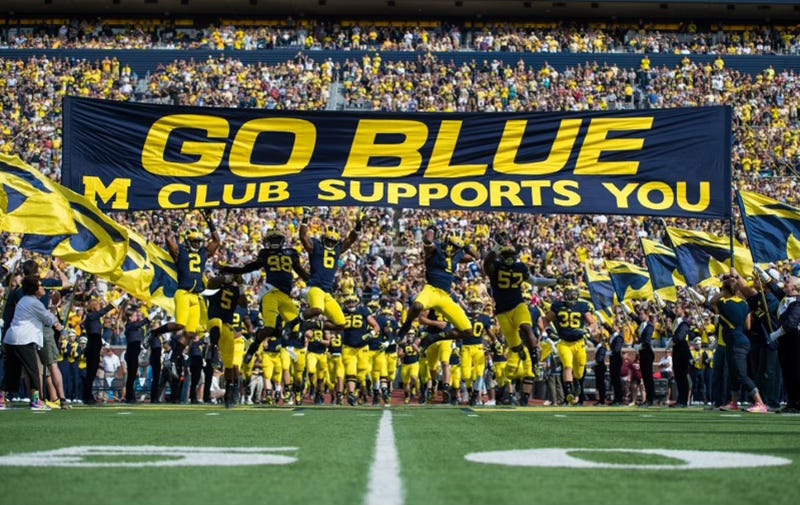
A stark contrast has always divided football between collegiate and professional level. The NFL, for decades, has been focused on dominating the sports market: TV deals, focused promotion of their athletes, massive stadium projects, and sponsorships. College football has long been a proponent of tradition, fueled by decades of student passion. However, college football has drawn eyes as a strong market to manipulate, and the line between tradition and business is becoming blurred. Michigan is no stranger to this change, recently announcing corporate sponsorships with major brands to increase revenue.
The market for college football has exploded, with powerhouse schools like Texas or Ohio State bringing in upwards of $300 million in revenue from football. The Michigan Wolverines, for instance, accounted for an adjusted revenue of $200 million from their football program. The football program itself is valued at an incredible $1.463 billion, roughly the same as the Miami Marlins.
In the face of these profit margins, universities have become more aggressive in in maximizing revenue from their football programs. At the beginning of 2026, the NCCAA announced that Division I sports programs would see add space on uniforms, equipment, and team apparel during non-championship games. SoFi and Notre Dame’s $20 million annual deal represents the largest sponsorship deal so far. For the first time in their history, Notre Dame football uniforms will be adorned with a corporate logo. Likewise, Ohio State has partnered with JPMorgan Chase at the tune of $17 million annually, the University of Kansas has partnered with XRP Cryptocurrency, and UC Berkely signed a deal with the A.I. firm Dialpad.
Easily the biggest development in the college football landscape is the role private equity firms have taken. Universities and firms have formed Limited Liability Companies (LLC) to protect the college from financial risk while giving it exposure to private financing. In December 2025, The University of Utah and Otro Capital signed a deal to from Utah Brands and Entertainment LLC. The company will handle certain revenue generating activities, including ticket sales, and take on an estimated $500 million in equity from private buyers. Other university-private equity LLCs include Champions Blue LLC (University of Kentucky), Clemson Ventures LLC (Clemson), and Spartan Ventures (Michigan State).
Other universities, including key rivals, have been incredibly willingly to commercialize their football programs. Michigan, however, has been and remains strongly opposed to private equity involvement in the sports program. In November, the governing board firmly shut down the idea of reducing its stake in the Big Ten in exchange for private investment. Conversation about a “Big Ten Enterprises,” giving 10% of the conference’s stake in television and media revenue, to the tune of a $2.4 billion investment. Both Michigan and USC opposed this, arguing giving up equity would not solve funding issues for certain athletic programs. Board of Regents member Jordan Acker stated “As a Regent, I believe selling off Michigan’s precious public university assets would betray our responsibility to students and taxpayers”, and “Having the richest college football conference join arms with private equity is not in my view a positive for the University of Michigan.”
While it’s easy to criticize other schools’ approach to private financing and praise Michigan’s caution, NIL has introduced serious funding concerns for many football programs. An anonymous front office staffer reported a 50% spike in payroll spending in 2026 compared to 2024. LSU’s 2026 football payroll is estimated above $40 million; offensive tackle Jordan Seaton will be making $4 million a year alone.
Michigan has been affected by alarming increases in payroll as well. Kyle Whittingham’s salary stands at $8.2 million annually. Bryce Underwoods $12 million deal sent shockwaves through the college football world. Andrew Marsh, Jaime Ffench Jr., JJ Buchanan, Cameron Brandt, and Blake Frazier are all making above $600,000, bringing Michigan’s total NIL payroll to around $30 million.
These new expenses are forcing Michigan to consider further commercializing their sports program. Former athletic director Warde Manuel went on record saying the athletic department is “exploring new revenue assets that are highly visible but thoughtfully integrated.” Corporate sponsorships on uniforms and gear have officially entered conversation within the Athletic department. Budgets projections through 2027 estimate razor thin margins. The Athletic Department claimed the budget for FY26 was balanced after receiving $15 million in support from the University, combined with $266.3 million from athletic revenue. An additional $26.7 million was budgeted it for revenue sharing with athletes. With two fewer home games this season compared to last, ticket revenue is projected to fall by $19.1 million. In 2027, an estimated 5.5% revenue increases matches a 5.4% expected cost increase, once again barely breaking even.
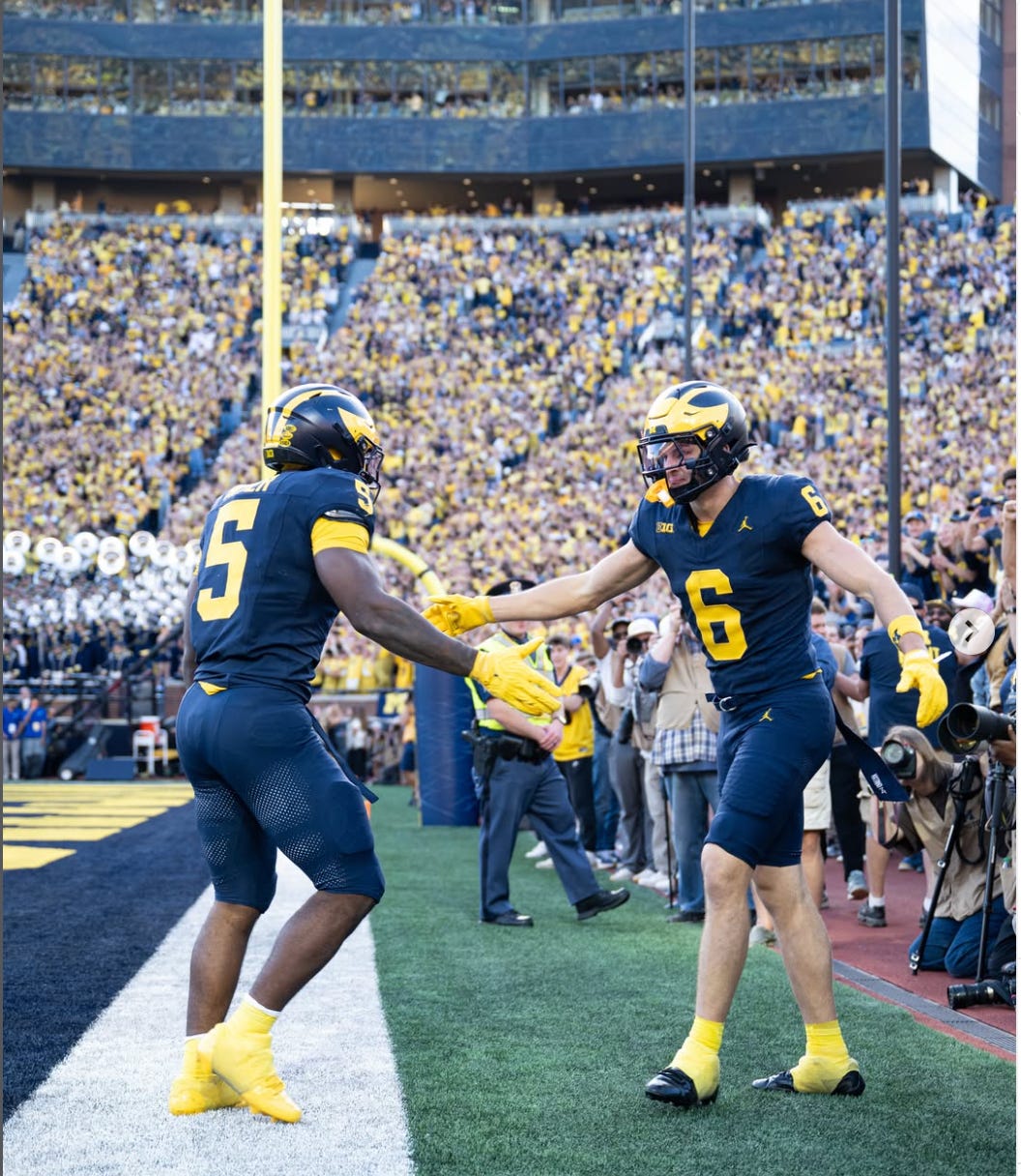
On August 19th, Michigan Athletics announced the creation of the Leaders and Best Champions Partners Program. While not an LLC, the initiative seeks out corporate sponsorships, integrated into Big House advertisements and potentially jersey patches. Initial corporate partners include Coca-Cola, Meijer, and Google Gemini . These sponsorships could be the solution to expanding spending capabilities in a more commercial era of college football.
NIL has fundamentally changed not only the way college recruitment is done or how rosters are built, but how athletic departments fund their operations. Even the most popular programs in college sports are being forced to find solutions to balance budgets. Smaller schools who typically operate at a loss have taken advantage of private money to gain a competitive edge. Smaller schools are using private money to gain a competitive edge, operating like a professional sports franchise.
Michigan sports will be forced to adapt just to remain a solvent athletic program. However, there is a conversation to be had on the impact of the Michigan sports culture and the wider college football culture. College football stands out because of its tradition and its simplicity. Now, the very nature of college football is changing, and the Michigan Wolverines of the past may look very different from the Wolverines of the future.