H.R. McMaster: America’s Greatest Threat Is Its Own Weakness
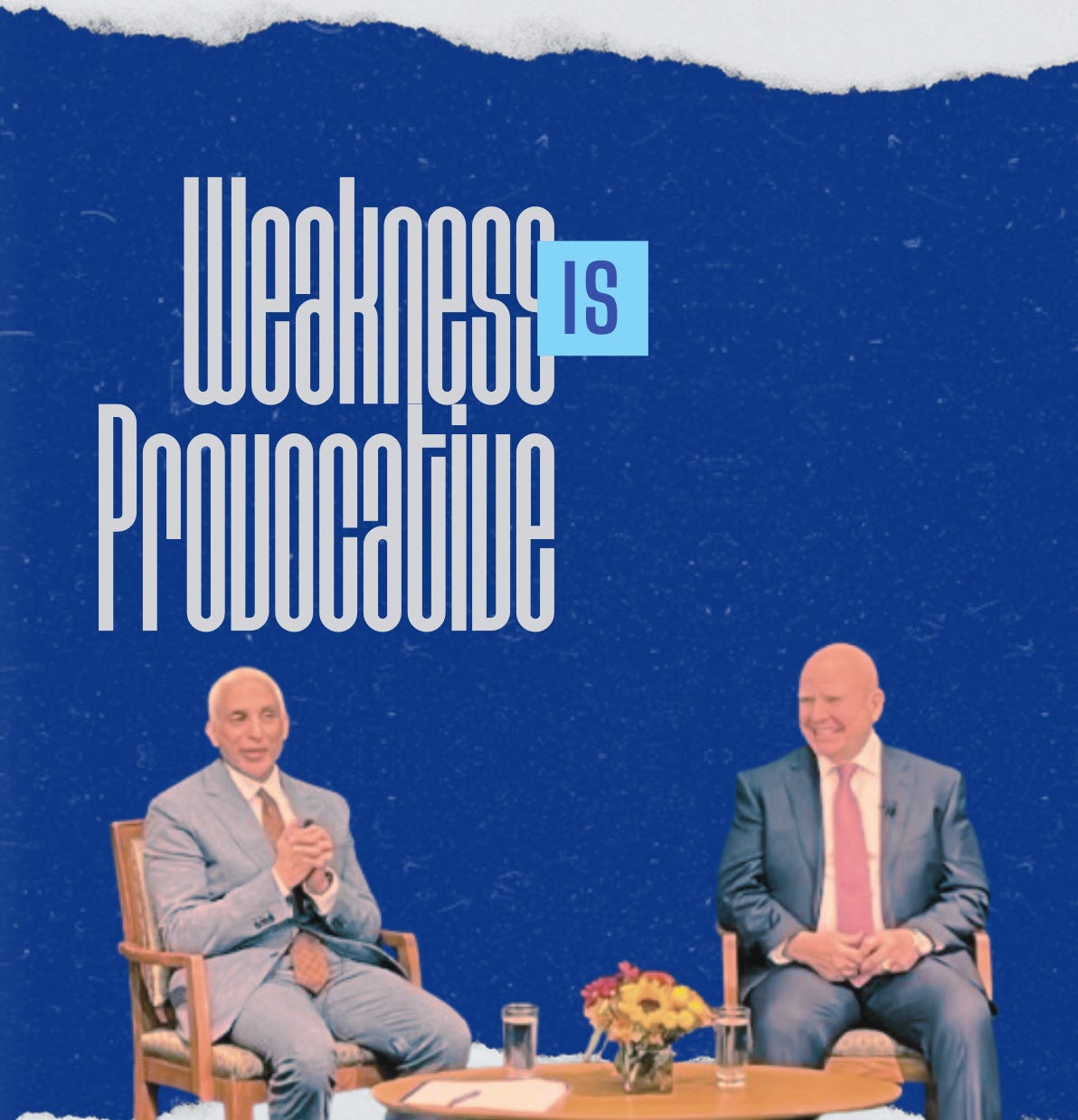
Retired Lieutenant General and former National Security Advisor H.R. McMaster delivered a stark warning about the dangers of American complacency during the 7th Annual Vandenberg Lecture at the University of Michigan’s Gerald R. Ford School of Public Policy. His central message was clear: weakness is provocative.
In a lecture titled “Cascading Crises and Prospects for Peace,” he addressed US national security failures (e.g., Vietnam), the recently formed axis of aggressors, colloquially known as CRINK (China, Russia, Iran, and North Korea), and lessons learned from decades in the defense realm.
The retired Lieutenant General began his address with a reference to his book, Dereliction of Duty, in which he highlights the mistakes, lies, and false assumptions that led to the unsuccessful Vietnam War. He explained how unclear goals, flaws built on unchallenged implicit assumptions, and a failure to truly understand the nature of the challenge led to the unsuccessful American involvement in Vietnam.
In examining present-day national security challenges facing the United States, McMaster focused on each of the countries in CRINK and the erosion in strategic competence that is detrimentally impacting the U.S. right now. He pointed to post Gulf and Cold War false assumptions (strategic narcissism), loss of manufacturing advantage, and China’s entry into the World Trade Organization as catalysts. Moreover, McMaster highlighted an overarching theme of overoptimism, arguing that it ultimately gave way to pessimism and, in turn, led to retrenchment. He offered two solutions: understand the nature of the challenge (combating strategic narcissism) and a strong dose of “strategic empathy” from an outside perspective, especially concerning the United States’s “rivals.”
When analyzing the People’s Republic of China (PRC), McMaster argued that the greatest fear of President Xi Jinping, and the Chinese Communist Party (CCP) is losing control. Furthermore, the retired Lieutenant General argued that the growing ties between the PRC and Russia are fueling a Chinese-American proxy war, with the PRC leveraging Russia to advance its interests. Moreover, the more the United States cooperates, rather than competes with the PRC, only allows China to become more emboldened.
McMaster also touched on Russia-North Korea relations, estimating that nearly half of all Russia’s heavy artillery was produced by the Democratic People’s Republic of Korea (DPRK). He emphasized the cause for concern, especially when considering the rapidly strengthening axis of aggressors.
Drawing on his decades of experience, McMaster underscored the importance of effective competition with our rivals, heightened competency (ending strategic narcissism), and avoiding weakness at all costs. He argued that a chain of events rooted in U.S. weakness began with the withdrawal from Afghanistan, which empowered Russia to invade Ukraine in 2023, and in conjunction with a tempered U.S. reaction, eventually culminated in the October 7th attacks.
H.R. McMaster’s address at the Gerald R. Ford School of Public Policy reminds us all that weakness leads to provocation, and thus, effective competition, not cooperation, is essential to securing peace.
About the Author
Jessica Finney is the lead Politics editor for The Michigan Review. She is an undergraduate student at the University of Michigan - Ann Arbor.