“Home is Everywhere”: Malala Reflects on her Journey at Michigan
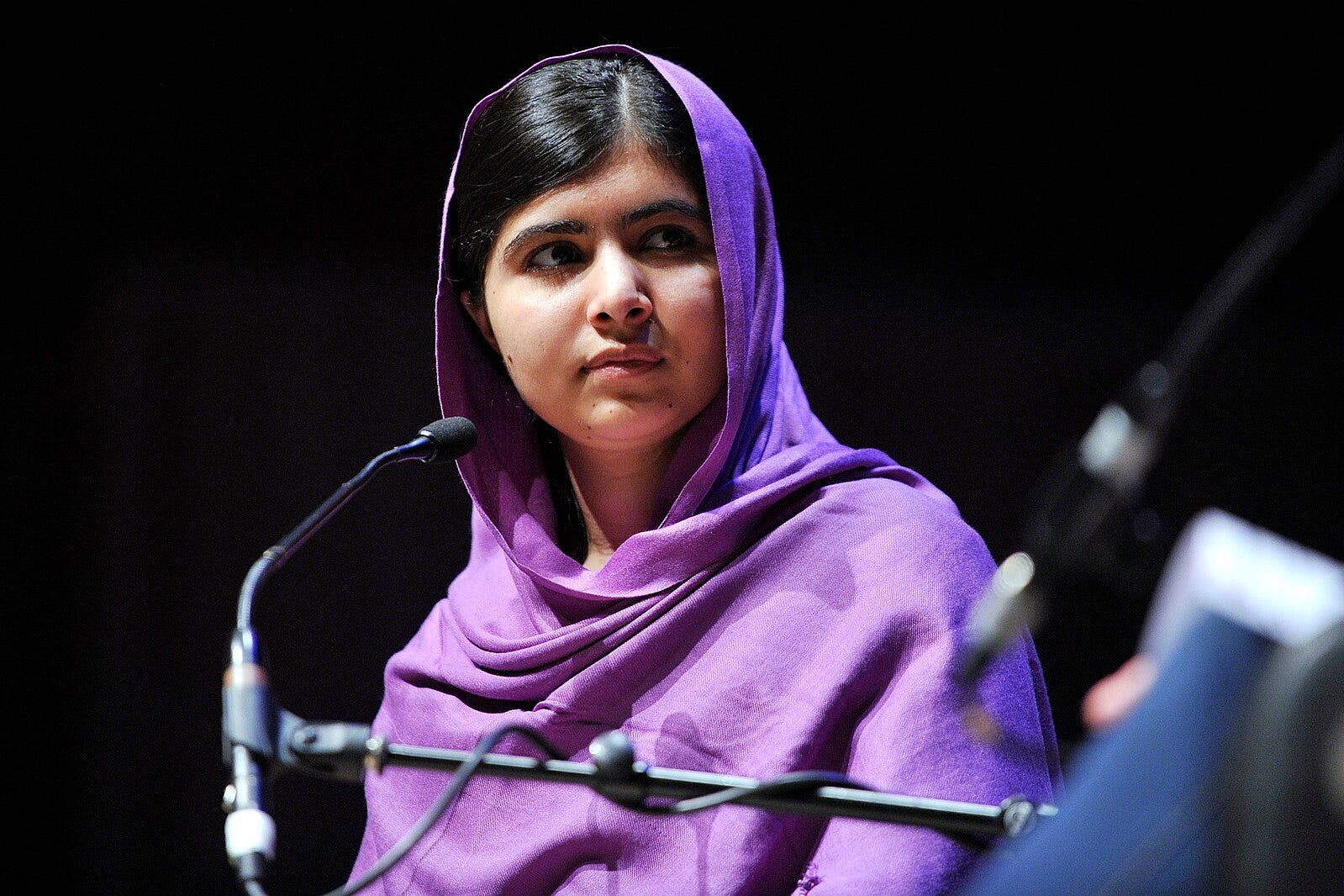
The University of Michigan recently hosted Nobel Peace Prize laureate Malala Yousafzai for a major event at the Michigan Union. Co-sponsored by the Weiner Diplomacy Center and the Ford School of Public Policy, the conversation drew a sold-out crowd of more than 600 guests, including U-M Interim President Domenico Grasso.
Malala spoke with former Ambassador Susan Page, Director of the Weiser Diplomacy Center, and Madhumita Lahiri, Associate Professor in U-M’s Department of English Language and Literature.
At just 15, Malala was shot on a school bus in Pakistan by Taliban militants. She miraculously survived and went on to dedicate her life to advancing girls’ education in Pakistan and around the world. At 17, she became the youngest recipient in history of the Nobel Peace Prize.
The conversation focused on Malala’s life after fame, as detailed in her new book, Finding My Way. Now 28, she reflected on her integration into Western society and the challenges of living a normal life under intense global scrutiny.
Malala described her time at Oxford University as a personal victory that proved she had overcome her fear of the Taliban. Yet, she said, her past continued to follow her. She recounted how an early experience at university triggered flashbacks of the attack, affecting her mental health and leading her to seek therapy.
She also spoke about the evolution of her public image as she became part of Western culture. Malala recalled being photographed without her consent while wearing jeans in college, a picture that sparked the “Shame on Malala” trend. Critics from her home country accused her of abandoning Pakistani tradition. “I felt part of two worlds,” she said, “and I embraced it. To me, home is everywhere.”
As Malala has matured, her view of activism has evolved as well. Once believing a single conversation could change the world, she now recognizes that progress requires patience and persistence. When asked by a student if she ever takes time to celebrate small victories, she replied, “We have to,” underscoring that meaningful change is incremental.
Today, Malala’s focus is on ending gender apartheid in the Global South and recognizing it as a crime against humanity. She called for the international community to hold the Taliban accountable, as girls and women in Afghanistan continue to face severe restrictions on education and basic rights.
Reflecting on her journey, Malala said her college years were a period of deep internal growth. Closing the evening, she left the audience of students with a message of hope:
“Stay ambitious, stay hopeful, have fun as well… and believe in yourself.”
About the Author
Luca Desanto is the Lead Campus Reporter for The Michigan Review. He is an undergraduate at the University of Michigan, an analyst at Ascent Consulting Group, and the Business Officer of Michigan Men’s Rugby.